


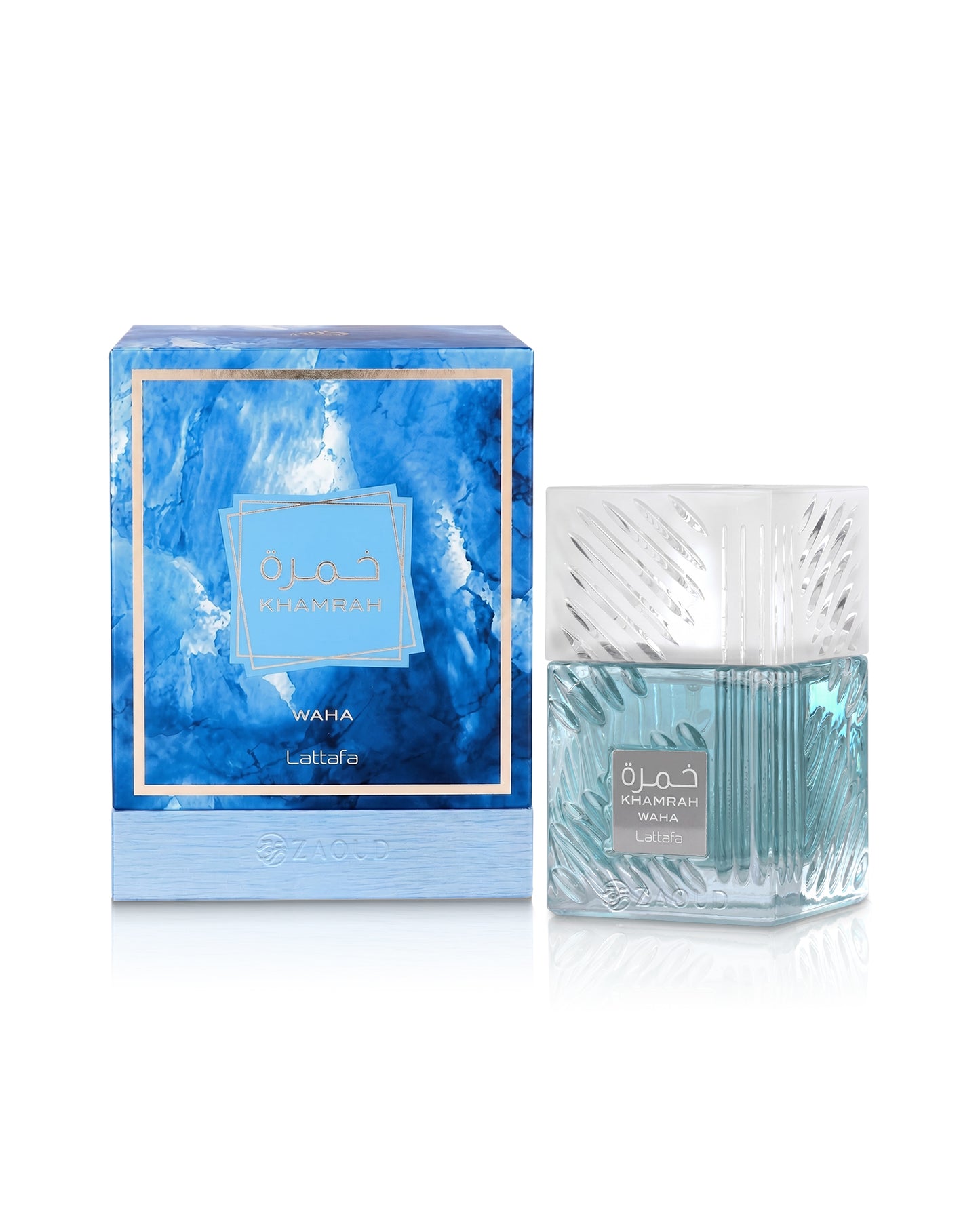
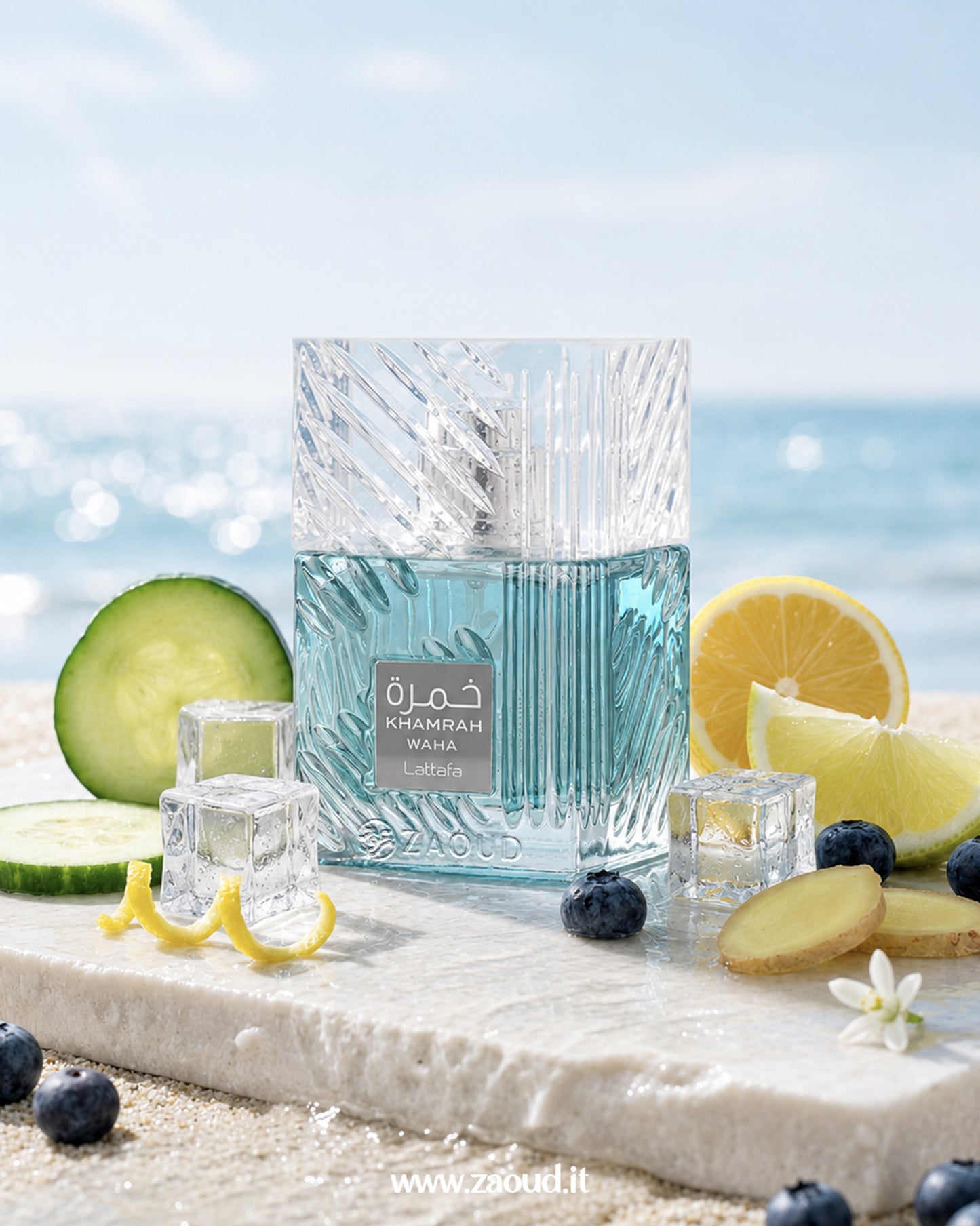


KHAMRAH WAHA Edp
Lattafa Khamrah Waha Perfume — Bergamot, Yuzu, Cucumber, Ginger, Sea Salt, Iris, Sage, Akigalawood, Vanilla, and Tonka Bean in an Aquatic-Aromatic Eau de Parfum by Jordi Fernández.
Lattafa Khamrah Waha perfume is an oasis that smells exactly like the word sounds cool water finding its way through warm sand. Bergamot, juniper, and yuzu open with bright, citrus-sharp freshness. Cucumber, ginger, sea salt, sage, and iris build a heart that breathes like open air above still water. Then vanilla, akigalawood, tonka, ambrofix, and musk settle into warm, creamy depth. As a result, this is the Khamrah that walks toward the horizon.
Created by Givaudan Senior Perfumer Jordi Fernández, the same perfumer behind Nabatieh, one of ZAOUD’s most celebrated French Avenue compositions, Lattafa Khamrah Waha perfume is the fourth chapter in the globally celebrated Khamrah line. Moreover, it is the first Khamrah to abandon the warm, spicy, gourmand DNA entirely. Furthermore, developed in collaboration with Givaudan, it is reportedly the world’s first fragrance to incorporate natural cucumber and natural yuzu. Consequently, this is not a flanker. It is a reinvention.
Lattafa KHAMRAH WAHA Fragrance Notes:
- Top Notes: Cucumber, Bergamot, Yuzu, Juniper.
- Middle Notes: Ginger, Iris, Sage, Sea Salt.
- Base Notes: Akigalawood, Tonka, Vanilla, Musk, Ambrofix™.
Thirteen notes across three purposeful layers. In particular, the composition is built around a central contrast: the heart is cool, watery, and airy (cucumber, sea salt, iris), while the base is warm, creamy, and enveloping (vanilla, tonka, akigalawood). Furthermore, this contrast mirrors the oasis itself cool water surrounded by warm sand. As a result, the pyramid’s architecture is not just olfactory but conceptual.
Natural Cucumber and Yuzu: Why Lattafa Khamrah Waha Perfume Makes History
Cucumber in perfumery has traditionally been a synthetic reconstruction, fresh, watery, and green, but built from aroma chemicals rather than the actual vegetable. Moreover, natural cucumber extract is extraordinarily difficult to capture: the vegetable’s scent is delicate, watery, and degrades rapidly during extraction. Furthermore, Givaudan’s decision to develop a natural cucumber material for Lattafa Khamrah Waha represents a genuine technical achievement in ingredient sourcing.
Yuzu, the Japanese citrus fruit prized for its distinctive bitter, tart, slightly floral character, similarly benefits from natural extraction over synthetic reconstruction. Moreover, natural yuzu captures aromatic complexity that synthetics approximate but never fully replicate. In Lattafa Khamrah Waha perfume, the combination of natural cucumber and natural yuzu creates an opening freshness that feels alive and organic rather than chemical. This is freshness with a pulse.
“Waha” means “oasis” in Arabic. Moreover, the name paints a vivid image: a cool, refreshing sanctuary surrounded by warm, golden sand. The cucumber-sea salt heart is the water. The vanilla-akigalawood-tonka base is the warm earth around it. Consequently, every element of the composition, from name to notes to structure, serves the same concept. Nothing is accidental.
How It Smells: From Citrus Dawn to Cool Water to Warm Sand
The opening is bright, crisp, and immediately alive. Bergamot delivers its prized bitter-floral citrus clarity. At the same time, yuzu adds its distinctive tart, slightly floral Japanese character, sharper and more complex than lemon. Furthermore, juniper contributes dry, gin-like botanical sharpness. Consequently, the first spray of Lattafa Khamrah Waha perfume feels like stepping out of shade into sharp morning sunlight beside water bright, clean, and wide awake.
Within ten minutes, the heart opens into something unprecedented in the Khamrah line. Specifically, cucumber introduces its cool, watery, green transparency, the note that defines the entire composition. Moreover, sea salt adds mineral, slightly briny freshness. Furthermore, ginger contributes warm, earthy bite that prevents the freshness from becoming cold. Sage provides herbal depth. Iris adds powdery, elegant sophistication. Consequently, the heart smells like cupping cool water in your hands at the edge of a desert spring.
The drydown is where the oasis meets the sand. Vanilla provides creamy, rounded warmth. In addition, akigalawood, the smoky, patchouli-adjacent synthetic that has appeared in several ZAOUD compositions adds woody depth and persistence. Furthermore, tonka bean contributes coumarin warmth. Ambrofix™ delivers clean, salty, amber-like radiance. Musk provides skin-close intimacy. Consequently, the lasting impression is warm vanilla-wood against cool, salt-tinged skin, the memory of water in warm air.
Jordi Fernández: The Givaudan Perfumer Connecting Lattafa Khamrah Waha to ZAOUD’s collection
Jordi Fernández is a Senior Perfumer at Givaudan, one of the world’s largest and most prestigious fragrance houses. Moreover, he created Nabatieh for French Avenue, one of the most acclaimed compositions in ZAOUD’s catalogue. Furthermore, his work spans both niche-quality originals and accessible creations for Middle Eastern houses. Consequently, Khamrah Waha benefits from the same creative intelligence that produced Nabatieh’s dark, complex, Petra-inspired composition.
The contrast between his two ZAOUD-relevant creations is striking. Specifically, Nabatieh is dark, dense, and archaeological, coffee, davana, and ancient stone. Khamrah Waha is bright, transparent, and aquatic, cucumber, sea salt, and desert oasis. Moreover, the fact that the same perfumer created both demonstrates extraordinary creative range. Consequently, anyone who loves Nabatieh should be curious about Khamrah Waha, same architect, completely different building.
Four Lattafa Khamrahs, Four Worlds
The Khamrah collection has evolved dramatically across four chapters. Moreover, the original Khamrah (2022) launched as a warm, spicy, gourmand composition that became one of the most viral Arabic fragrances in TikTok history. Khamrah Qahwa (2023) shifted into coffee-vanilla territory and won a Fragrantica Readers’ Choice Award in 2024. Furthermore, Khamrah Dukhan (2025) explored smoky, incense-forward darkness.
Lattafa Khamrah Waha breaks from all three predecessors entirely. Moreover, it is the first Khamrah without gourmand warmth as its primary identity. The oasis concept replaces the coffeehouse concept. Fresh cucumber and sea salt replace cinnamon and praline. Consequently, the four Khamrahs now span gourmand-spicy, coffee-vanilla, smoky-incense, and aquatic-aromatic territories, a collection that refuses to repeat itself.
Who Should Wear This and Who Should Skip
This is for:
- Fans of the Khamrah line who want the collection’s freshest, most modern, most radically different chapter.
- Wearers seeking a warm-weather signature with genuine depth cucumber and sea salt freshness over a creamy vanilla-wood base.
- Anyone curious about natural cucumber and yuzu in perfumery, a Givaudan-developed innovation that no other Arabic fragrance offers.
- Admirers of Jordi Fernández’s work who want to experience the same perfumer behind Nabatieh in a completely different creative territory.
On the other hand, skip if:
- You expect the original Khamrah’s warm, spicy, gourmand character. Waha deliberately abandons that DNA for fresh aquatic-aromatic territory.
- You dislike cucumber, aquatic, or marine-adjacent compositions. The cucumber-sea salt heart is prominent and defines the scent’s identity.
Lattafa Khamrah Waha Perfume Performance: Fresh Endurance
As an eau de parfum, Lattafa Khamrah Waha perfume benefits from the concentration’s higher oil content. Moreover, the akigalawood-vanilla-tonka-ambrofix-musk base is composed entirely of materials known for strong persistence. Furthermore, akigalawood specifically was designed to provide smoky, woody longevity that outlasts natural patchouli. Therefore, expect 8–10 hours of wear with the fresh cucumber-citrus opening evolving gradually into the warm vanilla-wood base.
For best results, apply to pulse points on warm days. Furthermore, the bergamot-yuzu opening settles within ten minutes into the cucumber-ginger-sea salt heart, so allow that transition. In addition, the aquatic-to-warm arc makes Khamrah Waha genuinely versatile across three seasons spring, summer, and early autumn. Consequently, this is the first Khamrah designed to thrive in warmth rather than cold.
Profumo fresco ottino per l'estate
Dura tutto il giorno
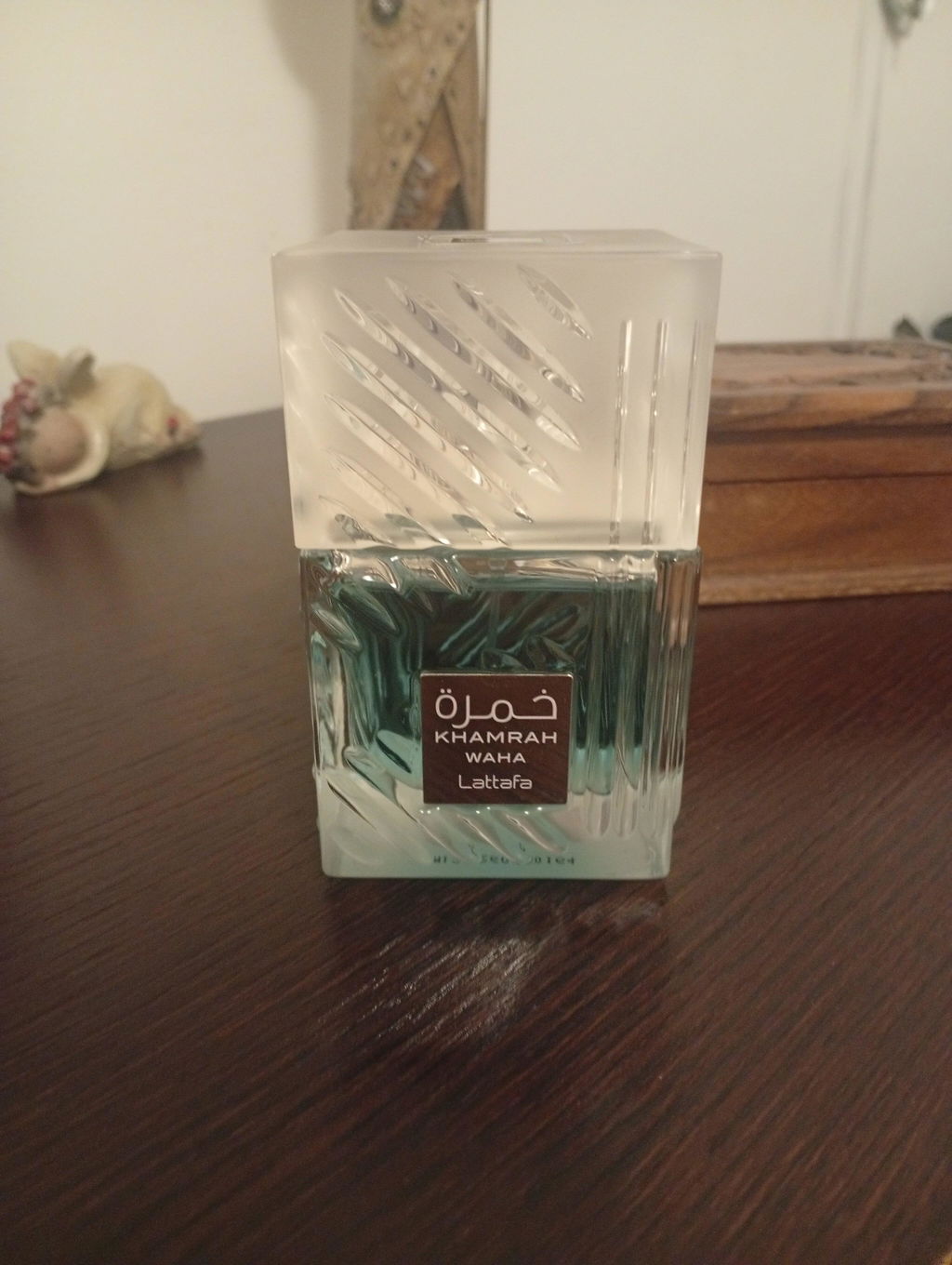
I expect more from this fragrance after all the hype that was given. I prefer her sisters the other khamrahs.
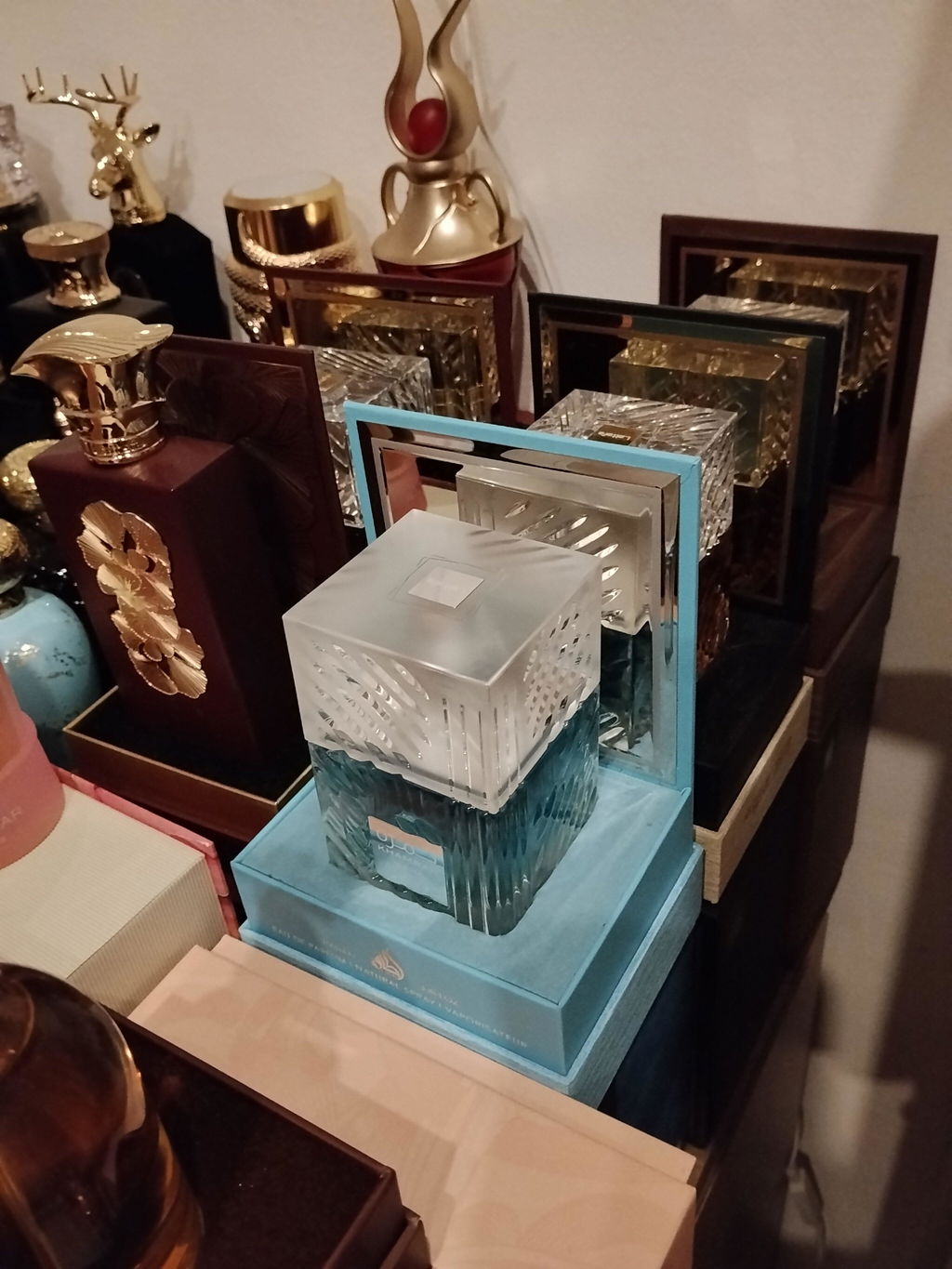
Very nice fresh perfum...like it.
perfect !
ottimo profumo decisamente estivo
Great, fresh spicy.. last long time.
Good original fresh scent, good presentacion
Tutto perfetto
Strong and fresh
I bought this perfume blindly after seeing various influencers talk about it. It's a good citrus but not too much, and it keeps the soul of Khamra. It's my first purchase on this site but they didn't send me free samples. Disappointed.
Support
Frequently asked questions
Everything you need to know about shipping, authenticity, and caring for your fragrance.
Orders & shipping
01 Do you ship across Italy?
Yes. We offer free shipping on all Italy orders over €75, typically delivered in 24–48 hours.
02 How can I track my order?
Once your order ships, you will receive a tracking link by email. You can also check status from your account.
Authenticity & products
03 Are your fragrances authentic?
Yes. Zaoud is a trusted reseller of 100% authentic Arabic and niche perfumes sourced from official channels.
04 Can I get help choosing a scent?
Absolutely. Contact us anytime for a free consultation — we help clear doubts before you buy.
Returns & care
05 What is your return policy?
Returns are accepted on eligible unopened items within the timeframe stated in our returns policy. Contact support to start a return.
06 How should I store my perfume?
Keep bottles upright in a cool, dry place away from direct sunlight and heat to preserve the fragrance.
Still have a question?
Contact us