
Best Citrus Floral Perfume Guide 2026 Summer

What makes the best citrus floral perfume? The difference from pure citrus, why it fades, the science of lasting power, and picks that hold all day.
Search for a citrus floral perfume and you will find hundreds of lists. Almost none of them explain the thing that actually matters: citrus and floral are not two separate families being blended together. They are chemically the same neighbourhood.
Once you understand that, choosing becomes far easier. So does understanding why most citrus perfumes disappear by lunchtime.
What Is a Citrus Floral Perfume?
A citrus floral perfume opens with citrus notes, bergamot, lemon, mandarin, orange, and develops into a floral heart, usually neroli, orange blossom, jasmine, or lily of the valley. The two families sit side by side rather than in sequence.
The result smells bright and clean at first, then softer and rounder as the flowers emerge. Most versions finish on musk, amber, or light woods.
This structure is the backbone of European perfumery. Moreover, it is the single most wearable style in fragrance: fresh enough for daytime, elegant enough for evening, and rarely offensive to anyone.
What Is the Difference Between Citrus and Floral Perfume?
This is the question people ask most, and the honest answer is subtler than most guides admit: the two families overlap at molecular level.
Pure citrus perfumes are built on the peel and rind, lemon, bergamot, grapefruit, mandarin. They smell zesty, sharp, and energetic. However, they fade fast.
Pure floral perfumes are built on petals, rose, jasmine, tuberose, lily of the valley. They smell softer, sweeter, and more romantic. They also last considerably longer.
Citrus florals sit deliberately between the two. Yet here is the detail that changes everything.
Both families share the same key molecules. Linalool, a terpene alcohol with a molecular weight of 154 g/mol, appears in over 200 plant species, including bergamot, lavender, neroli, and coriander. Perfumers use it specifically to bridge citrus and floral registers, and to lift accords like lily of the valley and jasmine.
Limonene, meanwhile, makes up more than 90% of orange, lemon, and mandarin oils. It also appears throughout floral materials.
Check the EU allergen declaration on almost any citrus floral bottle and you will see the proof printed on the box: limonene and linalool, listed together.
Why Is Neroli the Heart of Every Great Citrus Floral?
Neroli settles the argument entirely, because neroli is both.
It comes from the blossom of the bitter orange tree, Citrus aurantium. The same species yields three distinct perfumery materials, and knowing the difference makes you a far better buyer:
- Neroli, steam-distilled from the flowers. Green, fresh, slightly metallic, luminous.
- Orange blossom absolute, solvent-extracted from the same flowers. Richer, warmer, honeyed, more indolic.
- Petitgrain, distilled from the leaves and twigs. Green, bitter, woody.
One tree. Three materials. Citrus fruit and floral blossom from the same branch.
Neroli oil is dominated by linalool (25–45%) and limonene (10–25%), which is exactly why it reads as citrus or floral depending on what sits beside it. Bergamot pulls it toward citrus. Jasmine pulls it toward floral. Sandalwood makes it soft and Mediterranean.
That flexibility explains an unusual statistic: analysis of over 350 fragrances found roughly 37.7% of neroli appearances are as a heart note rather than a top note, a ratio no other major citrus comes close to. Neroli is structural connective tissue, not decoration.
If a citrus floral perfume smells expensive to you, check the pyramid. Neroli or orange blossom is almost certainly in the middle.
Why Do Citrus Perfumes Fade So Fast?
Physics, not poor quality. This is worth understanding before you spend money.
Limonene, the molecule that is citrus, has a molecular weight of 136.24 g/mol. That makes it one of the lightest materials in the entire perfumer's palette. Its boiling point sits at 176°C and its vapour pressure at 25°C is roughly 200 Pa.
Consequently, it evaporates almost immediately. In a pure citrus cologne, limonene is typically 80–90% gone within 45 to 60 minutes.
Now compare that to ambroxan, the modern amber material behind most long-lasting fragrances: molecular weight around 236 g/mol. Heavier molecules move slower and cling longer.
Here is the practical consequence. A genuinely pure citrus perfume cannot last all day. It is chemically impossible. Any citrus fragrance that lasts eight hours is lasting because of what sits underneath the citrus, not because of the citrus itself.
Anyone selling you a "long-lasting pure citrus" is selling you a long-lasting base with citrus on top. Which is fine, that is exactly what good perfumery does.
What Makes the Best Citrus Floral Perfume Actually Last?
Anchoring. The florals do part of the work, and the base does the rest.
Floral materials are heavier than citrus, so a citrus floral already outlasts a straight cologne. Furthermore, the base decides everything after hour two. Look for these on the box:
- Ambroxan or amber, the most effective modern fixative
- Musk, clings to skin and fabric, extends everything above it
- Sandalwood or cedarwood, creamy, structural, slow to leave
- Vetiver or patchouli, earthy weight that grounds bright openings
- Tonka bean or benzoin, soft, resinous, warm
This is where Arabian perfumery holds a structural advantage that has nothing to do with marketing. Gulf houses build fresh compositions on the same heavy bases they use for oud and amber fragrances. As a result, the citrus opening stays supported for hours rather than evaporating alone.
A typical European fresh EDT gives you three to four hours. The same profile built on ambroxan and musk gives you seven or more.
Which Are the Best Citrus Floral Perfumes to Buy?
Every pick below is verified against its full pyramid. Notably, each one demonstrates the anchoring principle in a different way.
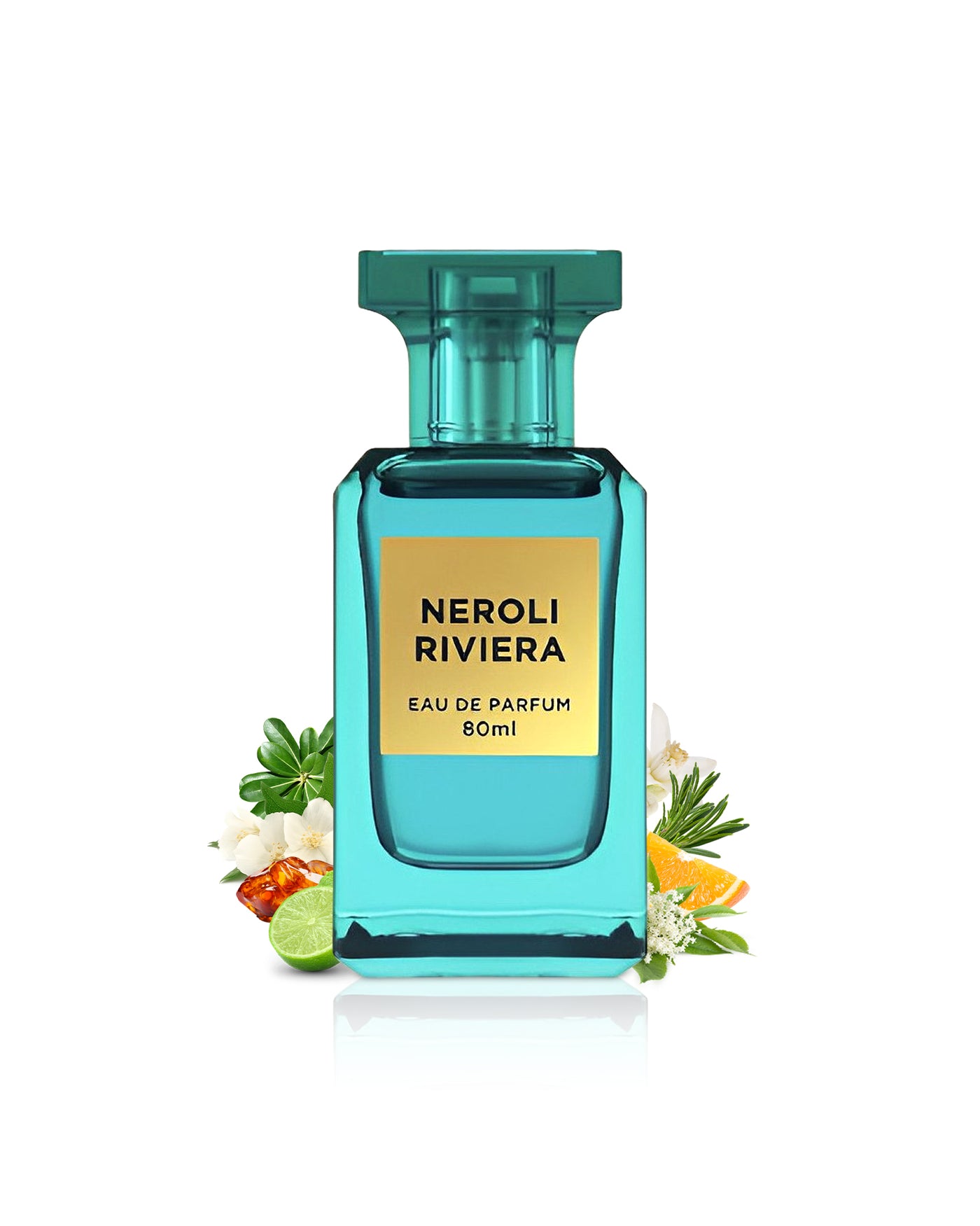
Neroli Riviera EDP, Fragrance World
The purest expression of the category in our range, and the obvious starting point.
Top: Bitter orange, bergamot, lemon, mandarin, lavender, rosemary, myrtle
Heart: Neroli, African orange flower, jasmine
Base: Musk mallow (ambrette), amber, angelica
The opening is a full citrus chord rather than a single note. Then neroli takes centre stage, supported by orange flower and jasmine for genuine floral body. Angelica adds an earthy-green nuance that keeps it from turning soapy.
Reported wear time sits around four to six hours. Unisex, Mediterranean, and remarkably easy to wear.
Best for: anyone who wants to understand what citrus floral actually means.
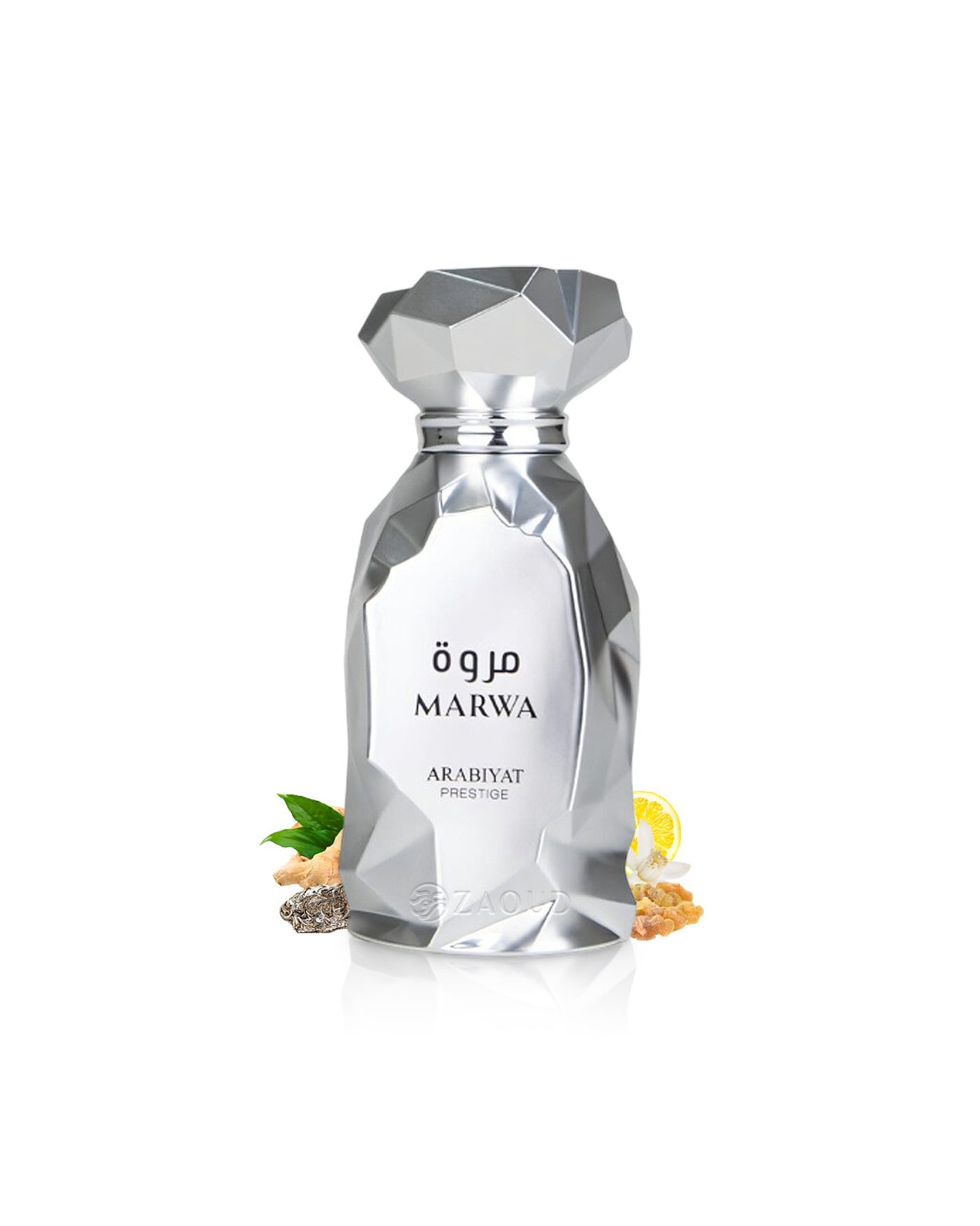
MARWA EDP, Arabiyat Prestige
The longevity champion of this list, and proof of everything explained above.
Top: Calabrian bergamot, lemon, Sicilian orange
Heart: Nigerian ginger, Tunisian neroli, Ceylon cinnamon
Base: Ambroxan, Chinese black tea, olibanum, guaiac wood
Look at that structure. Bright citrus on top, Tunisian neroli bridging the middle, then ambroxan and guaiac wood carrying the weight. This is textbook anchoring, the reason Marwa stays present for hours while lighter citrus fragrances vanish.
The black tea and olibanum give the drydown a smoky, polished quality that reads considerably more expensive than the price.
Best for: office wear, all-day presence, anyone who has been disappointed by fading citrus.
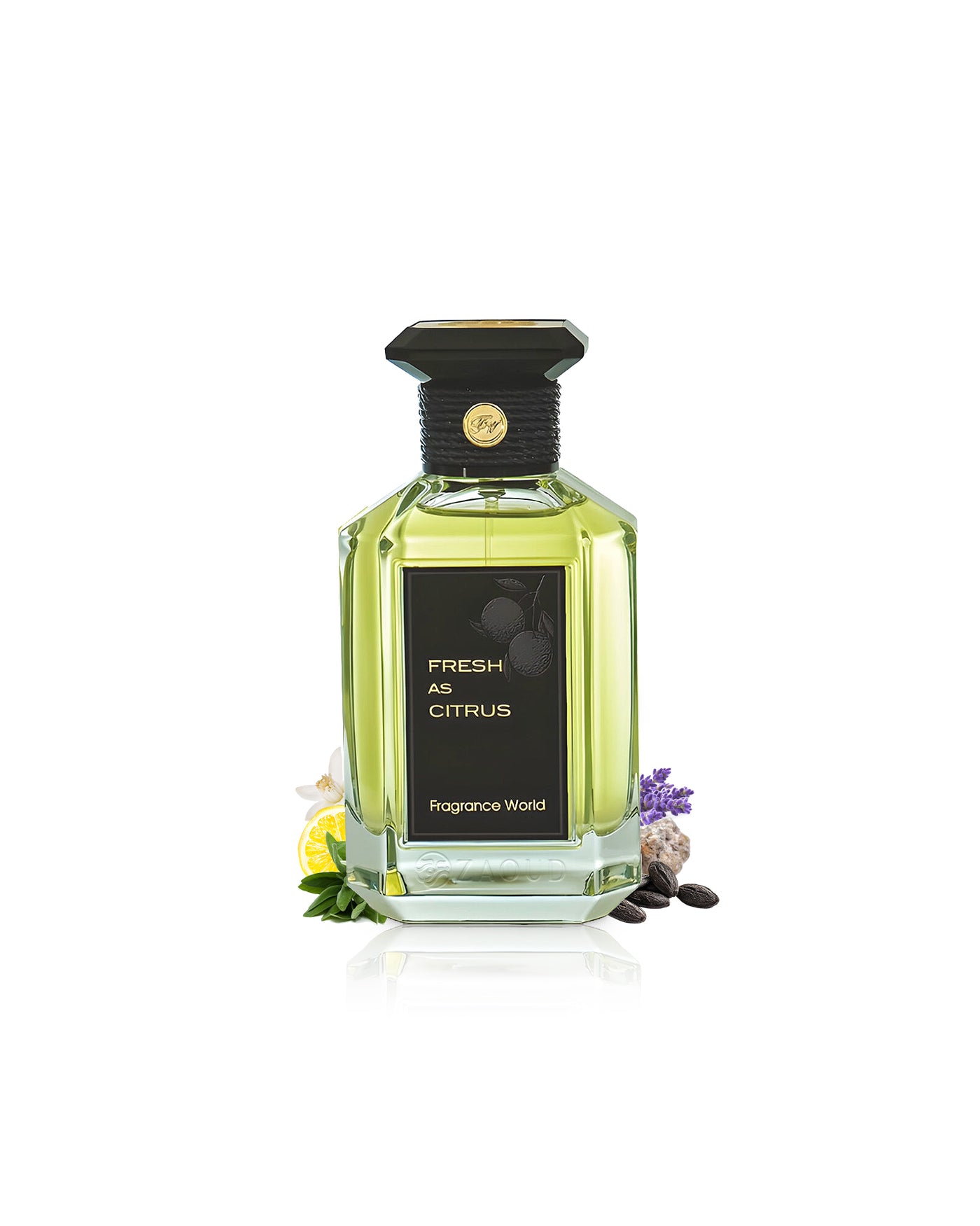
Fresh as Citrus EDP, Fragrance World
The herbal interpretation, for people who find florals too sweet.
Top: Lemon verbena, lemon, bergamot
Heart: Petitgrain, lavender, citron, sage, neroli
Base: Ambergris, vetiver, tonka bean
Note the heart: petitgrain and neroli together, meaning leaf and flower from the same tree in one composition. Sage and lavender push it aromatic rather than pretty.
Vetiver and tonka in the base do the heavy lifting. Consequently, this wears longer than its bright opening suggests.
Best for: men and unisex wearers, year-round versatility, Mediterranean summer.
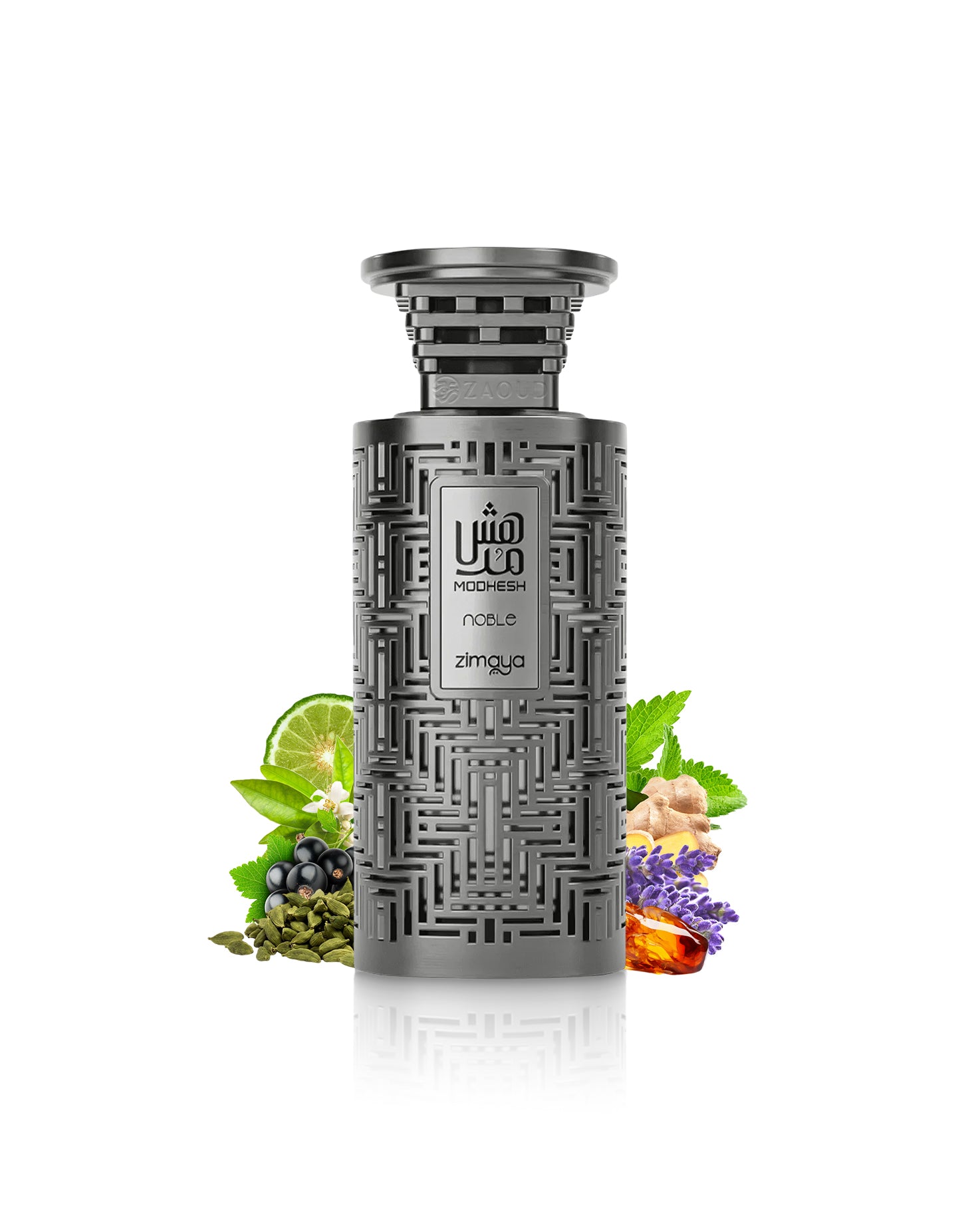
Modhesh Noble EDP, Zimaya
The spiced route into citrus floral, with an unusually lean structure.
Top: Bergamot, cardamom, black currant, ginger
Heart: Orange blossom, lavender, musk
Base: Patchouli, amber
Here orange blossom carries the entire floral duty alone, no supporting bouquet. Its honeyed, slightly narcotic warmth sits between clean lavender and skin-close musk.
The two-note base of patchouli and amber leaves nowhere to hide, which is either efficiency or courage depending on your view. It works.
Best for: cooler months, evening wear, anyone bored of predictable freshness.
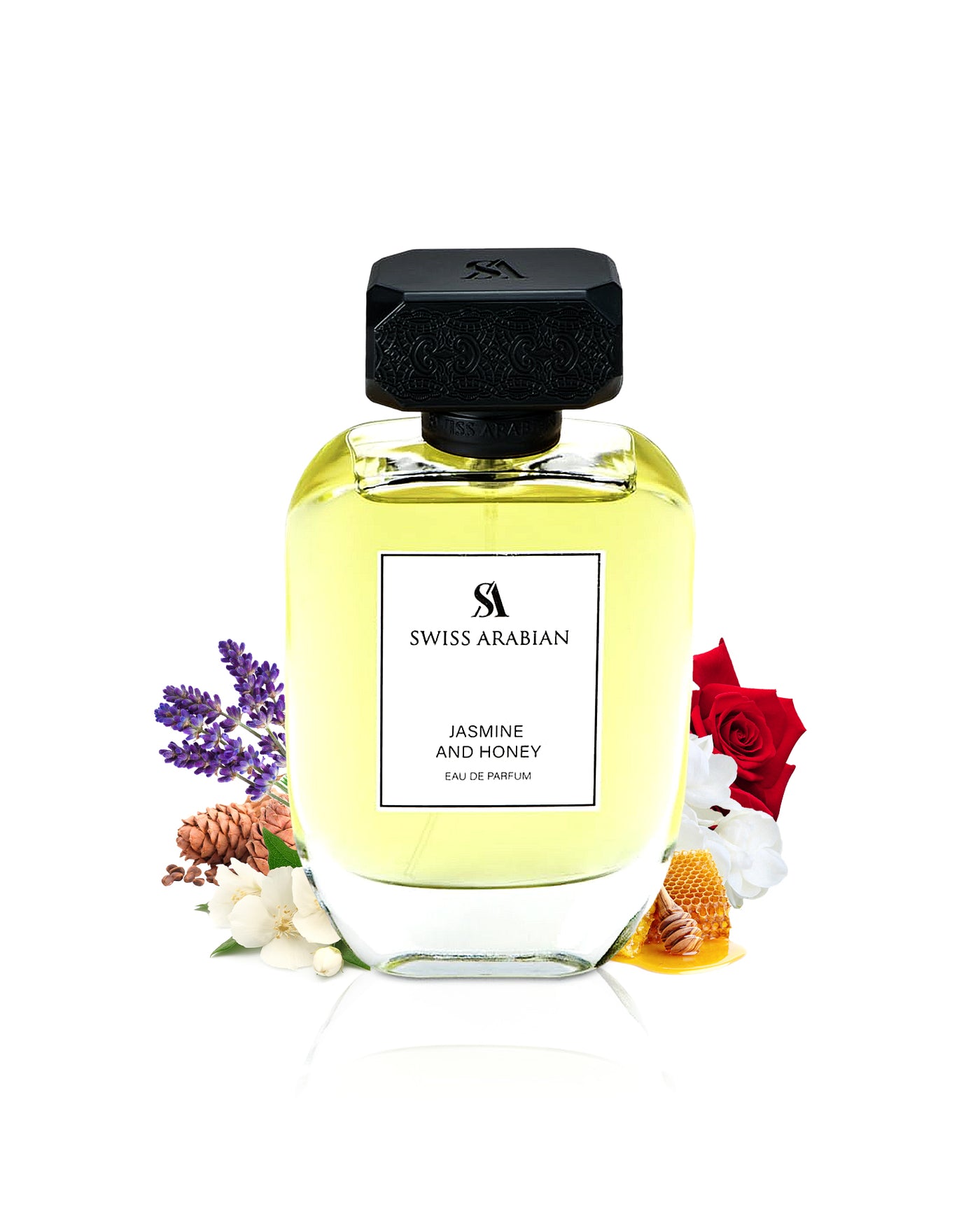
Jasmine and Honey EDP, Swiss Arabian
The floral-forward end of the spectrum, for buyers who want flowers first.
Opening: African orange flower (neroli)
Heart: Jasmine
Base: Patchouli, honey, cedarwood, rose
This one inverts the usual balance. Neroli opens rather than bridges, jasmine dominates the heart, and honey adds richness that most citrus florals avoid entirely.
Warmer and more feminine than the others listed. Additionally, the patchouli-cedarwood base gives it serious staying power.
Best for: evening, romantic occasions, floral lovers who want citrus lift rather than citrus dominance.
What Is an Underrated International Citrus Floral?
Worth knowing about even though we do not stock it: Berdoues, a French house founded in Toulouse in 1902 and still run by the same family four generations later.
Their 1902 collection is genuinely overlooked outside France. 1902 Musc & Néroli is the relevant one here, mandarin orange on top, orange blossom at the heart, musk and white cedar extract in the base. Reported wear sits around four to five hours, which is respectable for an Eau de Toilette.
It is also a neat demonstration of the chemistry above. The ingredient declaration lists limonene, linalool, hydroxycitronellal, and citral together, citrus and floral molecules printed side by side on a single label.
Berdoues rewards anyone who enjoys traditional French cologne structure. Furthermore, it costs a fraction of what comparable niche houses charge.
Is Citrus a Masculine or Feminine Scent?
Neither, historically. Citrus was the original unisex accord, eau de cologne was worn by everyone for two centuries before fragrance marketing invented gender categories in the twentieth century.
What shifts the perception is the heart note. Neroli and petitgrain read fresh and unisex. Jasmine and tuberose read feminine. Lavender and sage read masculine.
Therefore, choose by heart note rather than by the label on the box. Three of the five picks above are officially unisex, and the other two work perfectly well on anyone.
How Do You Make a Citrus Floral Perfume Last Longer?
Small adjustments produce real results with this category specifically.
Moisturise first. Dry skin absorbs and releases fragrance faster. Unscented moisturiser on pulse points gives light molecules something to hold.
Spray on fabric. Cloth holds citrus three to five times longer than skin. Collar, inner sleeves, and scarf edges work well.
Two sprays, not five. Heat amplifies citrus projection. Overspraying makes the opening louder without extending the drydown.
Never rub your wrists. Friction and heat accelerate evaporation of exactly the lightest molecules you want to keep.
Store it properly. Citrus materials oxidise faster than any other family. Keep bottles away from sunlight, heat, and bathroom humidity, or the top notes turn dull within months.
Let new bottles rest. Many Arabian EDPs improve noticeably after four to six weeks of maceration. Do not judge one by its first spray.
Frequently Asked Questions
What is the best citrus floral perfume?
For a true citrus floral, look for neroli or orange blossom in the heart and musk, amber, or ambroxan in the base. Neroli Riviera by Fragrance World is the clearest example of the style, while Arabiyat Prestige Marwa offers the same character with significantly stronger longevity thanks to its ambroxan base.
What is the difference between citrus and floral perfume?
Citrus perfumes are built on fruit peel, bergamot, lemon, mandarin, and smell zesty but fade within one to two hours. Floral perfumes are built on petals and last longer. However, the two overlap chemically: linalool and limonene appear in both families, which is why citrus floral blends feel so natural.
What is the longest lasting citrus perfume?
No pure citrus perfume lasts long, because limonene evaporates 80–90% within an hour. The longest lasting citrus fragrances are those anchored on heavy bases, ambroxan, musk, sandalwood, or vetiver. Arabian citrus EDPs typically outlast European fresh EDTs by three to four hours for this reason.
What does floral citrus smell like?
Bright and zesty for the first thirty minutes, then softer and rounder as flowers emerge. Expect lemon or bergamot sparkle giving way to neroli's green-honeyed glow, jasmine warmth, or orange blossom sweetness, finishing on clean musk or amber. The overall impression is fresh, elegant, and clean rather than sugary.
What perfume smells like fresh oranges?
Look for compositions built on Sicilian orange, mandarin, and bitter orange rather than lemon or grapefruit. Neroli and orange blossom in the heart extend that orange character well past the opening, since both come from the bitter orange tree itself and share its molecular profile.
Is neroli the same as orange blossom?
No, though both come from the same flower on the bitter orange tree. Neroli is steam-distilled and smells green, fresh, and slightly metallic. Orange blossom absolute is solvent-extracted and smells sweeter, warmer, and more honeyed. Petitgrain, from the leaves and twigs, is the third material from the same plant.
Does citrus perfume smell good on everyone?
Citrus is among the most universally flattering fragrance families, but skin chemistry matters. Oily skin amplifies and extends citrus; dry skin mutes it quickly. Warmer body temperature increases projection while shortening wear time. Always test on skin over several hours rather than judging from a paper strip.
Are citrus floral perfumes suitable for winter?
Yes, if the base is warm enough. Compositions finishing on amber, patchouli, tonka, or sandalwood hold up well in cold air, since cold reduces evaporation and slows projection. Lighter musk-based citrus florals suit spring and summer better, where heat lifts the opening notes.
Can men wear citrus floral perfumes?
Absolutely. Citrus florals containing neroli, petitgrain, lavender, or sage read as classically masculine, and eau de cologne was unisex for centuries before modern marketing split the categories. Choose by heart note rather than by the gender label on the packaging.
Why does my citrus perfume disappear after an hour?
That is the citrus itself evaporating, not a fault in the fragrance. Limonene has a molecular weight of 136 g/mol and vanishes within 45 to 60 minutes. What remains afterwards is the heart and base. If nothing remains at all, the composition simply lacks a substantial base.
Comments (0)