



FRAGRANCE NOTES


Middle notes


Base notes


LAST CHANCE Edp
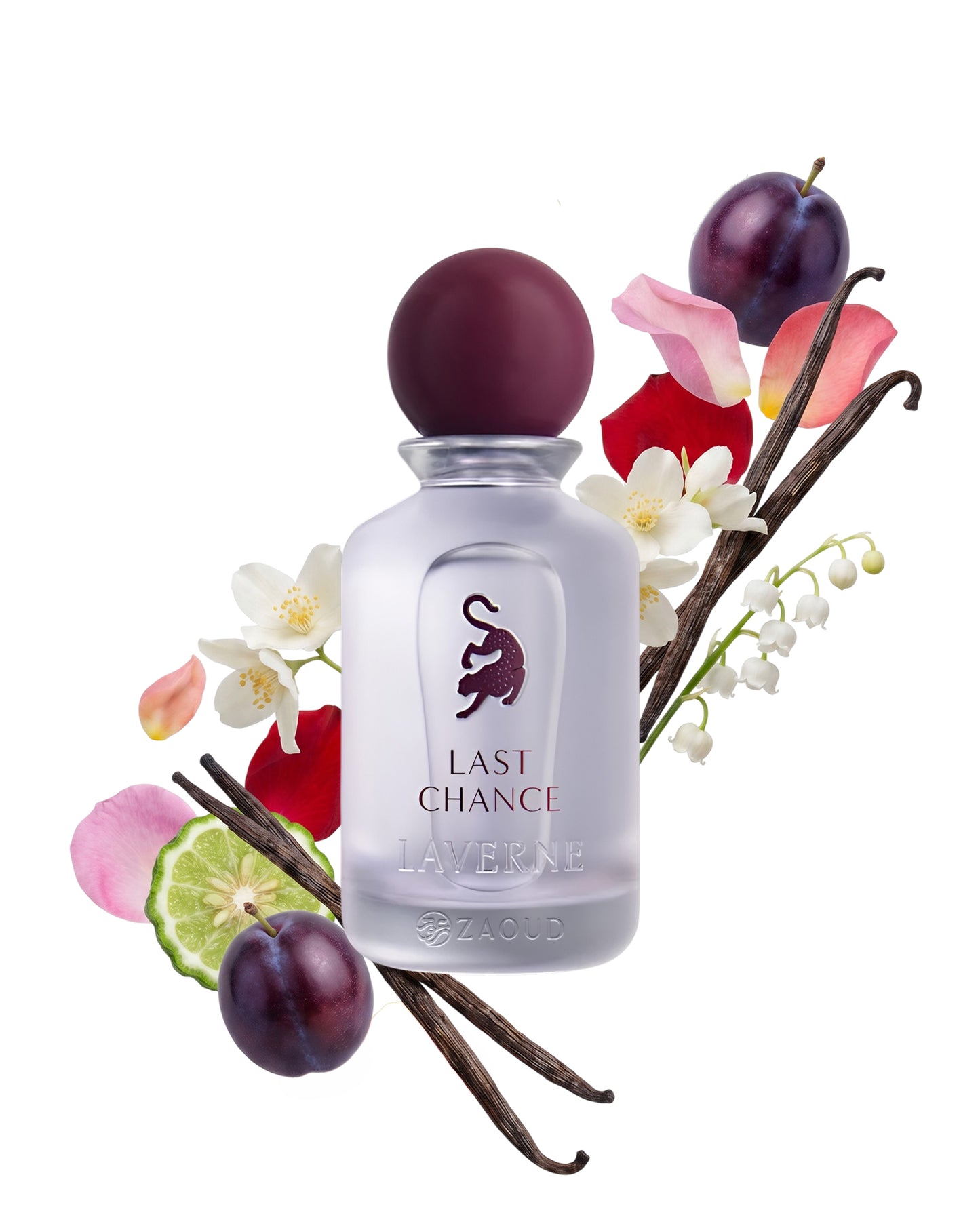
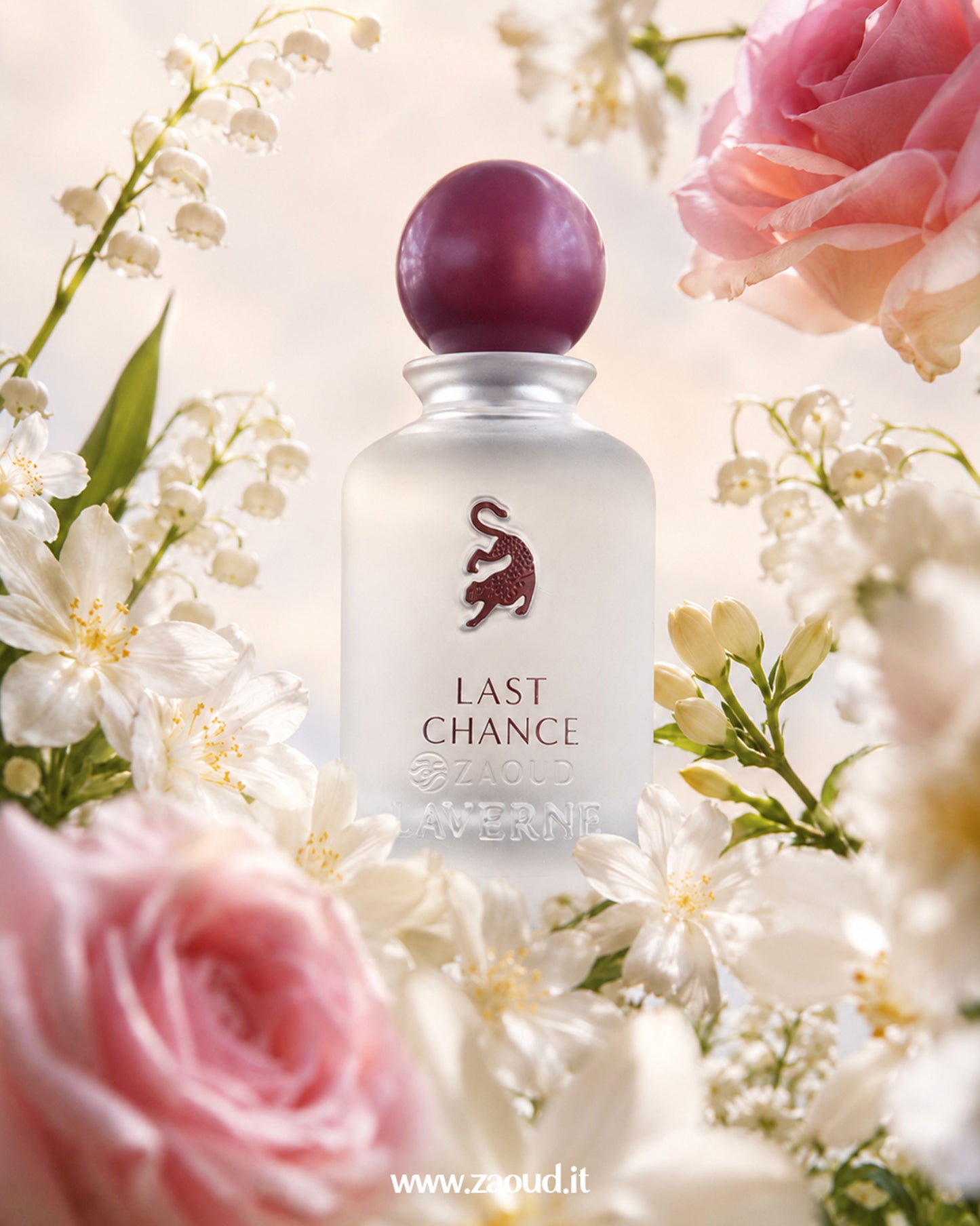
Laverne Last Chance Eau de Parfum — Bergamot, Peach, Rose, Lily of the Valley, Jasmine, Angelica Root, Sandalwood, Vanilla, Musk, and Patchouli in a White-Floral Oriental by Nathalie Lorson.
Laverne Last Chance eau de parfum smells like pressing your face into a bouquet that someone left on a windowsill overnight. The petals are still cold. The stems are still damp. Moreover, bergamot and peach brighten the top while rose holds the opening together. Lily of the valley and jasmine occupy the heart in white floral silence. Furthermore, angelica root darkens the base with an earthy, herbal edge that most florals never risk. As a result, this is not a cheerful bouquet. It is the last one. The name means what it says.
In our collection, Laverne Last Chance eau de parfum is Nathalie Lorson’s second composition for this Saudi house. Moreover, she also created Bella, a fruity-floral with rum in the heart. Last Chance goes quieter. The rum is gone. The patchwork of white flowers and herbal roots replaces the boozy warmth. Furthermore, where Bella broadcasts, Last Chance confides. Consequently, two compositions from one perfumer reveal the range of a single creative mind working within one brand.
Laverne LAST CHANCE Fragrance Notes:
- Top Notes: Bergamot, Peach, Rose.
- Middle Notes: Lily of the Valley, Jasmine.
- Base Notes: Angelica Root, Sandalwood, Vanilla, Musk, Patchouli.
Ten notes. Three on top. Two in the heart. Five in the base. Moreover, the pyramid is bottom-heavy. The heart carries only two white florals. The base carries five materials including the unusual angelica root. Furthermore, that weight distribution tells you where the composition lives. It blooms briefly at the top, pauses in the heart, and settles into a long, earthy, vanillic drydown. Consequently, Last Chance is designed to linger in the base rather than announce itself in the opening.
Lily of the Valley: The Flower That Cannot Be Extracted, Inside Laverne Last Chance Eau de Parfum
Lily of the valley is one of the most famous scents in perfumery. Moreover, it is also one of the most artificial. No essential oil can be extracted from Convallaria majalis. The flower produces too little aromatic material for commercial distillation. Furthermore, every lily of the valley note in every perfume at every price point is synthetic. Hydroxycitronellal was the original molecule used to recreate it. As a result, when you smell lily of the valley in any composition, you are smelling a laboratory’s interpretation of a flower that refuses to give up its oil.
In our recent Lattafa Ana Abiyedh Passion article, we explained that Mahonial, a Givaudan molecule recreates lily of the valley character. Moreover, Last Chance likely uses similar or related molecules to produce the same dewy, green, slightly sweet floral effect. Furthermore, Lorson’s skill is in making the synthetic feel inevitable rather than constructed. Consequently, the lily of the valley in Last Chance smells like a garden, not a laboratory. That illusion is the craft.
How Laverne Last Chance Smells: From Peach-Kissed Petals to White Floral Whisper to Earthy Vanilla
The opening is soft, fruity, and floral at the same time. Bergamot provides its familiar bitter-citrus clarity. Moreover, peach adds velvety, downy sweetness. Furthermore, rose enters not as a statement but as a frame around the peach. Together the three notes create an opening that smells like cold rose petals resting on a sliced peach the fruit still dewy, the flower still folded. As a result, the first spray asks you to lean in rather than step back.
Within eight minutes, the white florals arrive. Lily of the valley brings its clean, dewy, green, slightly sweet character. Moreover, jasmine adds its richer, creamier, more indolic warmth. The two flowers balance each other. Furthermore, lily of the valley is transparent. Jasmine is opaque. One lets light through. The other absorbs it. Consequently, the heart smells like standing between two open windows one facing a garden, the other facing a warm room.
The drydown is where Lorson planted the weight. Angelica root introduces its distinctive earthy, herbal, slightly celery-like, musky quality. Moreover, sandalwood adds creamy, milky softness. Furthermore, vanilla provides comforting sweetness. Musk brings skin-close intimacy. Patchouli grounds everything in dark earth. Consequently, the lasting impression is vanilla and angelica root on musk-clean skin something sweet growing from something rooted. The bouquet is gone. What remains is the soil it grew from.
One Perfumer, Two Compositions: Lorson’s Bella and Last Chance Compared
Nathalie Lorson created both Laverne compositions in our catalogue. Moreover, Laverne Bella opens with five fruits and puts rum in the heart. Last Chance opens with three notes and puts lily of the valley in the heart. Furthermore, Bella broadcasts. Laverne Last Chance confides. Bella is the dinner. Last Chance is the morning after. Consequently, one perfumer created two opposite moods for one brand without repeating a single structural choice.
The shared thread is sandalwood-vanilla-musk-patchouli in both bases. Moreover, Lorson used the same four base materials to anchor two different compositions. Bella’s base feels like dessert. Last Chance’s base feels like earth. Furthermore, the difference is what sits above them. Rum makes the base taste sweet. Angelica root makes the same base taste green. Consequently, the bases are identical. The compositions are not.
Who Should Wear Laverne Last Chance and Who Should Skip
This is for:
- Wearers who find most florals too loud, too sweet, or too predictable. Moreover, the lily of the valley-jasmine heart is deliberately quiet. It confides rather than announces.
- Fans of white florals grounded in earthy, herbal bases. Furthermore, angelica root gives Last Chance a depth that standard sandalwood-vanilla compositions lack.
- Anyone who owns Bella and wants to experience the other side of Lorson’s work for this brand. Two compositions. Two moods. Same creator.
- Morning wearers. The brand positions Last Chance as a daily morning fragrance. The soft, reflective character suits that moment.
On the other hand, skip if:
- You want projection, volume, or compliment-magnet energy. Moreover, Last Chance lives close to the skin. It rewards closeness, not distance.
- Earthy, herbal base notes feel strange beneath florals for your taste. Furthermore, angelica root has a celery-like, musky quality that not every nose welcomes beneath jasmine and lily of the valley.
Laverne Last Chance Eau de Parfum Performance: Quiet Persistence
The five-note base of angelica root, sandalwood, vanilla, musk, and patchouli contains four persistent materials. Moreover, patchouli and sandalwood evaporate slowly. Vanilla clings to skin and fabric. Musk persists at close range. Furthermore, in our testing, Laverne Last Chance eau de parfum delivered five to seven hours of soft, floral-earthy wear. The lily of the valley fades first. The angelica-vanilla base remains longest. Consequently, performance is moderate and consistent appropriate for a quiet composition.
For best results, spray two to three times on pulse points. Moreover, the bergamot-peach-rose top settles within five minutes into the lily of the valley-jasmine heart. Furthermore, the composition works year-round because the white floral character adapts. Spring amplifies the freshness. Winter deepens the vanilla. Consequently, Last Chance serves as a gentle morning signature across all seasons.
Support
Frequently asked questions
Everything you need to know about shipping, authenticity, and caring for your fragrance.
Orders & shipping
01 Do you ship across Italy?
Yes. We offer free shipping on all Italy orders over €75, typically delivered in 24–48 hours.
02 How can I track my order?
Once your order ships, you will receive a tracking link by email. You can also check status from your account.
Authenticity & products
03 Are your fragrances authentic?
Yes. Zaoud is a trusted reseller of 100% authentic Arabic and niche perfumes sourced from official channels.
04 Can I get help choosing a scent?
Absolutely. Contact us anytime for a free consultation — we help clear doubts before you buy.
Returns & care
05 What is your return policy?
Returns are accepted on eligible unopened items within the timeframe stated in our returns policy. Contact support to start a return.
06 How should I store my perfume?
Keep bottles upright in a cool, dry place away from direct sunlight and heat to preserve the fragrance.
Still have a question?
Contact us