
Iris in Perfumery: Origin, History & Why It Costs a Fortune

Most people picture the flower. The tall purple bloom in a spring garden. That's not what perfumers mean. When a perfumer says iris, they mean something that grows underground, takes up to a decade to become useful, and sells for more per kilogram than gold. Understanding iris in perfumery, its real origin, its chemistry, and why it still dominates luxury fragrance today, changes the way you experience every powdery, elegant scent you'll ever wear.

Where Did Iris in Perfumery Actually Begin?
Iris has been a scented ingredient for over three thousand years. Orris root was originally used in ancient Egypt, where it was incorporated into perfumes and cosmetics. The ancient Greeks followed Roman and Greek cultures embraced the iris flower for its medicinal and aromatic properties, often infusing oils with iris to create rich floral fragrances used by nobles.
But the story gets sharper in Renaissance Europe. The use of orris as a scented ingredient dates back to the Renaissance with the queen of France, Catherine de Medici. At the time, people crushed iris roots and mixed them with rice powder after sieving, producing a sweet violet-scented powder used for clothes, wigs, and faces. This is the origin of why iris perfumes still carry that signature powdery quality the association with fine face powder is centuries old, not accidental.
By the Renaissance, especially in Venice and Florence, finely ground orris root powder was packed into linen chests and wardrobes to preserve textiles, repel insects, and scent garments with a powder that aged gracefully. In English royal circles, the ingredient even earned a nickname: orris root was historically known as Queen Elizabeth Root, reflecting its popularity among European aristocracy.

What Is Orris Root and Why Does It Come From the Root, Not the Flower?
This is the question most people never think to ask. Iris in perfumery refers not to the flower but to the root of the Iris pallida or Iris germanica plant, harvested and aged for several years before yielding orris butter, one of the most expensive natural materials in commercial perfumery.
The flower itself smells beautiful, but its aroma can't be captured economically or stably. The rhizome the underground stem is where the real chemistry lives. And here's the counterintuitive part: fresh iris rhizomes, at the moment of harvest, have almost no perfume at all. Time creates the scent, not the plant.
Freshly harvested iris rhizomes smell of little more than wet earth. The transformation happens during drying: as the rhizome desiccates over years of careful aging, enzymatic processes convert iridals relatively odorless compounds into irones, the class of molecules responsible for iris's signature scent.
Three iris species dominate commercial perfumery: Iris germanica, Iris pallida, and Iris florentina, each with a slightly different scent profile. Of the three, Iris pallida — grown predominantly in Tuscany and Morocco — is considered the finest source. Italy and Morocco account for over 80% of global orris production, with annual output estimated at less than 20 metric tons due to the labor- and time-intensive process. That scarcity is not manufactured. It's built into the biology of the plant.

The Extraction Process: Why Patience Is the Real Ingredient
No other natural perfumery material demands as much time as orris. The process from planting to finished butter can span nearly a decade, and there are no shortcuts.
Iris rhizomes must be aged for three to five years before they develop any perfumery interest, this is mandatory cultivation time, not optional. After harvest, the rhizomes are washed, peeled, and stored in a cool, dry place traditionally a stone cellar in the hills above Florence and left there for three to five years. Workers turn them occasionally. Inside each rhizome, a slow chemical reaction converts iridals into irones: the molecules you actually smell when you smell iris.
Once sufficiently aged, the dried rhizomes are ground and processed. Two primary extracts result:
Orris butter — produced through steam distillation, this waxy yellow-orange solid is the most common form used by perfumers. It contains 15–20% irones and costs between $30,000 and $60,000 per kilogram.
Orris absolute — produced through solvent extraction, this is the concentrated version. Orris absolute can reach up to 80% irones but is extremely rare and costly, exceeding $100,000 per kilogram.
The yield numbers are brutal. A ton of dried, aged orris rhizome six years of patient work yields, after distillation, approximately two kilograms of orris butter. That is a 0.2% yield. To produce a single kilogram of iris essence, approximately 500 kilograms of root bulbs are required. No technology has changed these ratios. You cannot accelerate the aging. You cannot skip the chemistry.

What Does Iris Actually Smell Like?
If you've never consciously identified iris in a fragrance, the description sounds contradictory at first: cool yet powdery, floral yet mineral, elegant yet slightly vegetal.
The fully aged, dried rhizome produces a complex interplay of violet flowers, cool powder, fresh carrots, and something metallic and slightly earthy that perfumers describe as stony or mineral. This cold, mineral quality is perhaps iris's most distinctive attribute unlike almost every other floral material in perfumery, iris carries a character of cool hauteur that reads as simultaneously aristocratic and slightly intimidating.
The key aromatic compounds are the irones. The primary aromatic compounds in orris butter are alpha-irone, beta-irone, and gamma-irone. Of these, alpha-irone is considered the most characteristic, carrying the cool, violet-floral, slightly fruity character that is the heart of the iris smell.
What makes iris polarising is the "carrot-pea" undertone. In compositions where iris plays an anchor role, the molecule produces a "carrot-pea-violet" architectural impression that is distinctively iris and not easily mistaken for any other natural material. The cool-vegetal undertone reads as elegant to some wearers and as off-putting to others. This is not a flaw in the ingredient. It's the fingerprint of genuine orris, the earthy complexity that synthetic versions struggle to reproduce.
As a structural note, iris typically lives in the heart and base. Iris is used primarily as a heart or base note at 0.1–0.5% concentration, with longevity averaging across EDP and extrait formats due to the low volatility and fixative properties of irones.

The Chemistry Behind Iris: Irones, Ionones, and a Chemist's Happy Accident
In 1893, the science of iris changed permanently though not quite in the way the chemist intended. A German chemist named Ferdinand Tiemann sat down with samples of orris butter and tried to figure out, molecule by molecule, what made it smell the way it did. He and his colleague Paul Krüger isolated the irones and identified them as the source of the violet-and-powder scent. The synthetic irones they produced were close to the natural ones, but not identical. On the way to that not-quite-success, Tiemann and Krüger noticed a related family of compounds: slightly simpler, easier to synthesize from cheap starting materials. They called these compounds ionones. Ionones smelled, almost magically, of violets and this was accidentally one of the most important discoveries in the history of fragrance.
Ionones became the affordable bridge to the iris effect. Today, most commercial iris fragrances use a blend strategy. The synthetic alpha-irone, beta-irone, and gamma-irone molecules reproduce approximately 60–70% of the natural orris butter aromatic profile but lack some of the architectural complexity of the natural material. For most architectural iris compositions, small percentages of natural orris butter are blended with significant synthetic irone to control cost while preserving compositional complexity.
The gap between natural and synthetic is real but nuanced. Natural orris contains hundreds of secondary compounds that create micro-variations in diffusion and depth. Synthetic isolates often reproduce the headline but not the undertone. Fragrances built with genuine orris tend to feel rounder and more integrated. This is why a niche iris built on real orris butter smells different from a mass-market violet accord even when both are technically "iris" fragrances.
Iris in Modern Perfumery: From Luxury Staple to Cultural Icon
Iris reached its commercial peak in the early 20th century. In the early 20th century, the perfume industry prospered and used this precious ingredient in a large number of elegant fragrances, majorly called iris fragrances. Classic powdery feminines from French houses used orris not just as a note but as an architectural foundation the material that gave their compositions that seamless, skin-close quality people still describe as old money.
The revival of iris in contemporary perfumery is equally significant. Designers rediscovered what classical perfumers already knew: iris creates a sense of quiet authority that nothing else replicates. Modern men's fragrance rebuilt around iris-anchored compositions from the 2000s onward, with iris reading fully masculine in wear when composed architecturally. The ingredient that began in royal powder rooms became the backbone of a new generation of unisex and masculine structures.
Today, the divide in iris perfumery runs along a clear line: natural orris vs. synthetic irone. Buyers who want a clean reference for natural orris should look at niche-tier compositions where the budget allows for higher orris-butter ratios. At the designer level, most architectural iris compositions use small percentages of natural orris butter blended with significant synthetic irone to control cost while preserving compositional complexity.
Sustainability is now reshaping sourcing decisions too. Iris cultivation spans nearly a decade from planting to finished butter. Climate shifts and agricultural pressure can affect supply, and responsible sourcing requires long-term grower relationships and realistic production pacing. When brands use genuine orris, they are committing to slow supply chains and that decision shapes price, but also integrity.
Explore Iris-Based Fragrances at ZAOUD
For readers who want to experience iris beyond the article, ZAOUD carries several fragrances where iris appears as a key accord or central note. These selections highlight different sides of iris: powdery, leathery, woody, aromatic, and softly floral.
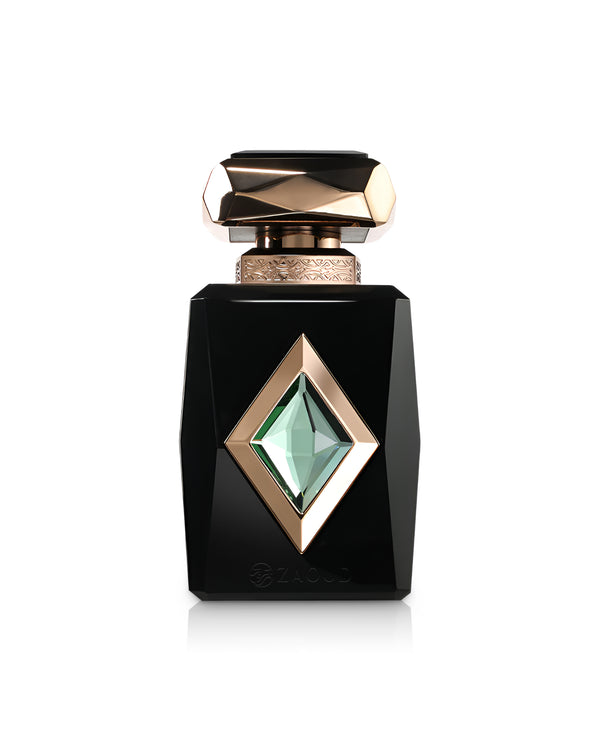
Iris Patchouli EXdp
French AvenueMain Accord: Amber, Iris, Violet, Powdery, Leather
A bold leather-iris fragrance built around noble iris, violet, smoked leather, benzoin, and patchouli.
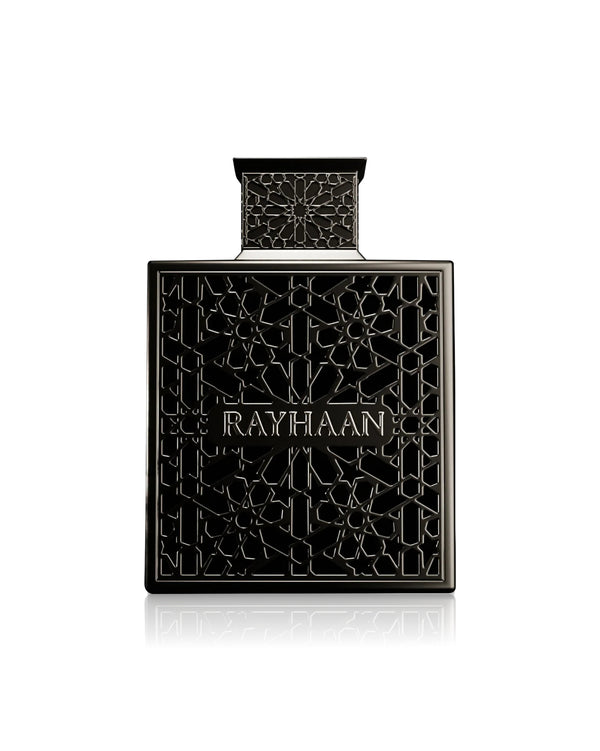
Obsidian Edp
RayhaanMain Accord: Amber, Woody, Earthy, Iris, Powdery
A dark, powdery iris scent with citrus, sueded leather, cedarwood, sandalwood, ambrette, and oud.
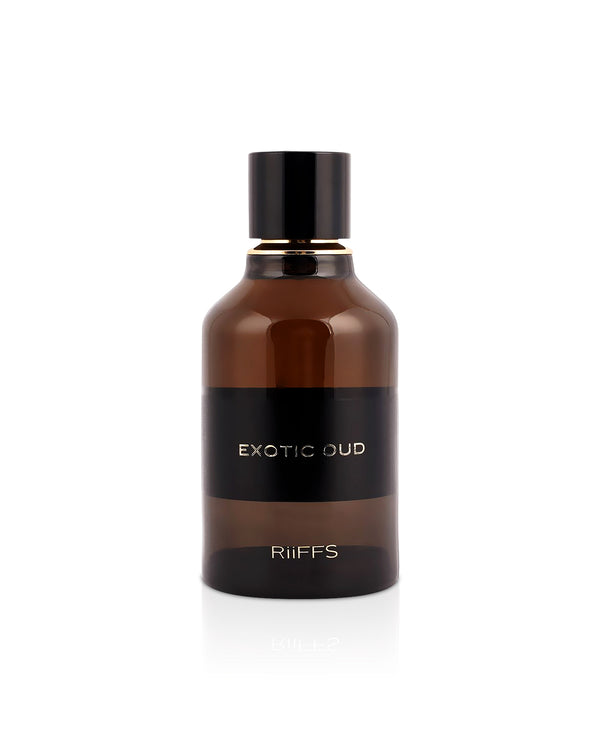
Exotic Oud Edp
RiiffsMain Accord: Iris, Powdery, Woody, Aromatic, Floral
A sophisticated iris-forward composition with lavender, pear, ambrette, cedar, musk, and oud warmth.
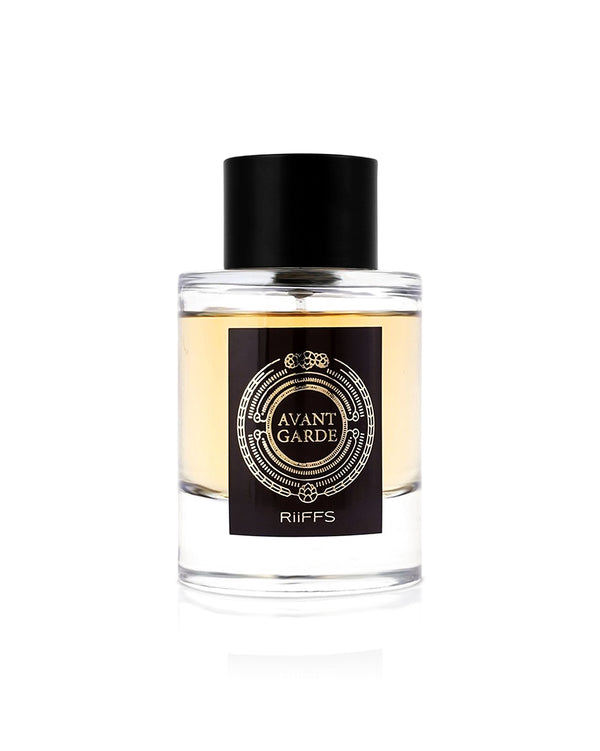
Avant Garde Edp
RiiffsMain Accord: Aromatic, Spicy, Woody, Powdery, Iris
A clean aromatic iris fragrance with neroli, cardamom, carrot seeds, violet, geranium, cedar, and sandalwood.
Conclusion
Iris is one of the few fragrance ingredients that earns its mythology. It takes years to become itself. Iris costs more per gram than precious metals. It smells simultaneously of flowers, powder, wet stone, and something just barely vegetal, a combination no single aromachemical has perfectly captured. From Catherine de Medici's scented wigs to the stone cellars of Tuscany where rhizomes age in silence, iris in perfumery has always required patience from everyone who works with it.
That patience is, in the end, exactly what you smell. A note that couldn't be rushed. A material that costs what time actually costs. When you encounter a fragrance built on real orris butter, you're wearing something that started growing before the perfumer sat down to compose it.
Frequently Asked Questions About Iris in Perfumery
What is the difference between iris and orris in perfumery?
Iris refers to the plant and flower. Orris refers specifically to the dried, aged rhizome (underground stem) used in fragrance production. Both names describe the same ingredient — perfumers tend to say orris, fragrance marketers tend to say iris. The scent comes from the root, not the flower.
Why is orris root so expensive compared to other ingredients?
The math is unforgiving. A ton of dried, aged orris rhizome yields approximately two kilograms of orris butter after distillation — a 0.2% yield. Add six to nine years of cultivation and aging time, and the cost reflects reality, not premium branding.
Is iris a heart note or a base note?
Both, depending on concentration and composition. In most fragrances, iris functions as a heart note with strong base-note persistence. Its low volatility gives it staying power well into the dry-down, which is why it's also valued as a fixative.
Can synthetic iris replace natural orris butter?
Partially. Synthetic irone molecules reproduce approximately 60–70% of the natural orris butter aromatic profile, handling the main powdery-violet character well. The deeper architectural complexity and integration that natural orris provides is harder to replicate and is why genuine orris still commands its price in niche and luxury compositions.
What fragrance families use iris most often?
Iris appears most prominently in powdery florals, chypres, and woody-elegant compositions. It anchors classic feminines, modern unisex structures, and masculine fougères alike. Its versatility is part of why it has remained in continuous use across more than three thousand years of fragrance history.
Ready to explore iris fragrances?
Discover powdery, woody, leathery, and elegant iris perfumes from ZAOUD's curated fragrance collection.
Shop Iris Fragrances
Commentaires (0)