
Givaudan, Microcaps & Perfume Pearls: What It Means

In a laboratory in Schlieren, outside Zurich, a machine is producing droplets of perfume oil so uniform in size that the variation between them is measured in fractions of a micron. Each droplet gets wrapped in a shell made from seaweed. Thousands of them float, suspended, in a bottle of water.
Spray it, and the shells rupture. The scent arrives on skin with no alcohol whatsoever.
This is Perfume Pearls, and at the beginning of July 2026 Givaudan - the largest fragrance house on earth - bought a stake in the company that makes it. The Givaudan Microcaps Perfume Pearls deal was covered across the trade press within hours.
The trade press covered it as a technology story. It is more interesting than that. Because the problem Givaudan has just spent money to solve is one that perfumers in Kannauj, Taif, and Dubai solved a very long time ago, using no microfluidics at all.
The short version: Givaudan took an equity stake in Microcaps AG, a 2019 ETH Zurich spin-off, in July 2026. Microcaps makes Perfume Pearls - pure fragrance oil sealed inside algae-derived alginate shells, suspended in water, released when sprayed. No ethanol, no emulsifiers. The technology already appears in a Kajal fine fragrance and in prestige skincare. The open question is performance: early wearers of the first commercial launch reported the scent vanishing within the hour.

What Exactly Did Givaudan and Microcaps Announce?
The Givaudan Microcaps Perfume Pearls partnership is an equity investment plus a strategic collaboration. Financial terms were not disclosed, which in practice means the stake is minority and Microcaps stays independent.
Givaudan framed it as reinforcing its position in fragrance innovation, with particular emphasis on what it called non-alcoholic fine fragrance performance. Maurizio Volpi, President of Fragrance & Beauty, described the partnership as a strategic step strengthening the group's innovation capabilities.
Jeremy Compton, Givaudan's Global Head of Science & Technology for Fragrances, went further, calling encapsulation one of the most transformative technologies in the field and pointing toward applications across both fragrance and skincare.
From the Microcaps side, co-founders and co-CEOs Dr Alessandro Ofner and Michael Hagander said the deal lets them scale, and spoke about redefining what high-precision encapsulation means for the industry.
Read past the corporate language and the logic is straightforward. Givaudan has bought early access to a manufacturing capability it did not have, in a category it expects to grow.
What Are Perfume Pearls, Actually?
Start with what conventional perfume is: fragrance oil dissolved in ethanol, roughly 15–20% oil for an Eau de Parfum. The alcohol does two jobs. It holds the oil in solution, and it flashes off your skin in seconds, throwing the molecules into the air. That evaporation is what creates the opening blast.
It also dries your skin, stings anything freshly shaved, and rules the product out for a substantial share of the world's population on religious grounds.
Perfume Pearls removes the ethanol entirely. Instead, pure fragrance oil is encapsulated inside a translucent shell of alginate - a polysaccharide extracted from brown algae, the same family of material used in food thickeners and wound dressings. Those capsules are then suspended in a structured water base.
Nothing is dissolved. Nothing needs an emulsifier or a solubiliser to stay mixed. The oil sits intact inside its shell until the moment of application, when the spray mechanism ruptures the capsules and releases fragrance and water together onto skin.
The genuinely clever part is the manufacturing. Microcaps spun out of ETH Zurich's Complex Materials Group in 2019 and built what it describes as the first industrial-scale microfluidic platform of its kind. It uses step emulsification - a process that forms droplets one at a time through precisely engineered channels rather than by brute-force mixing.
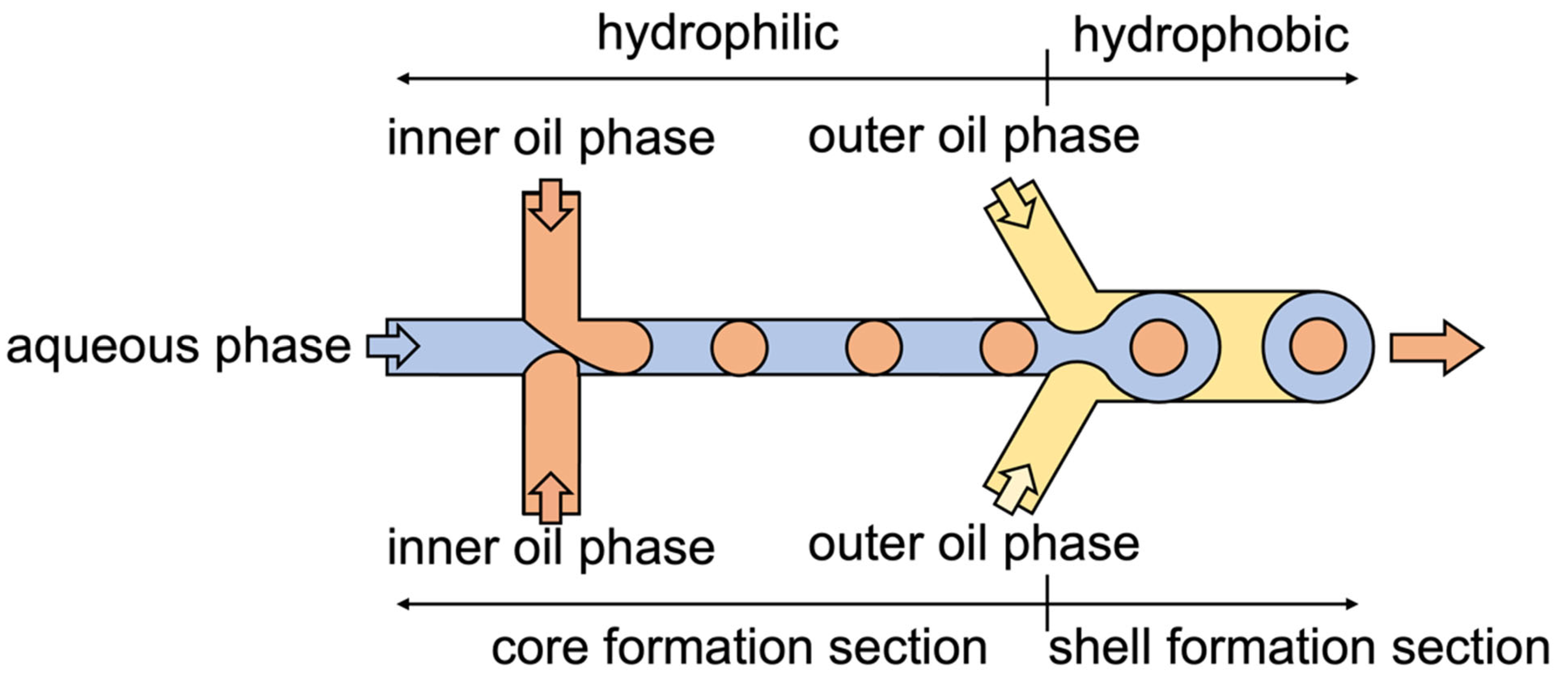
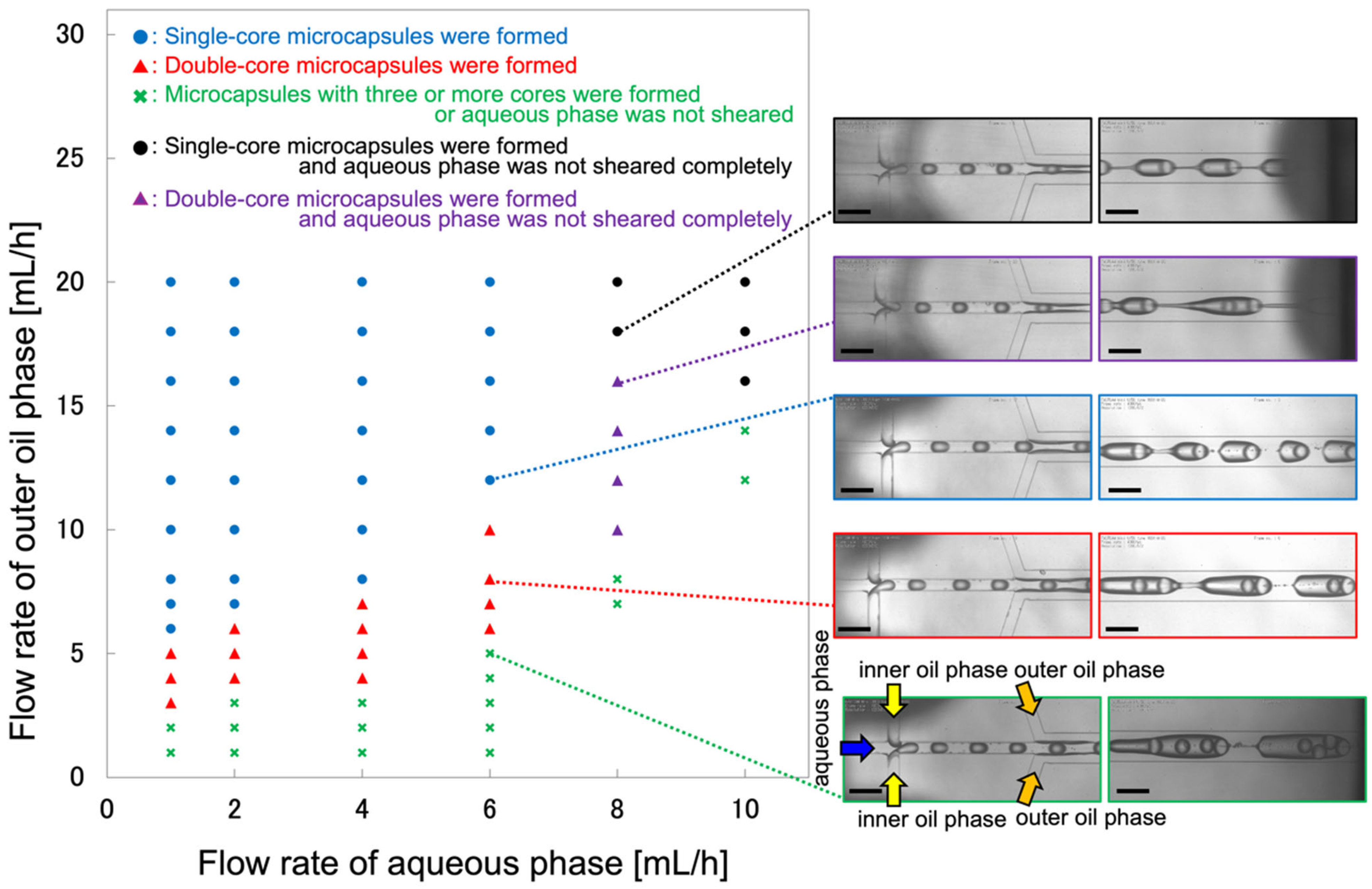
Conventional encapsulation produces capsules across a wide size range. Microfluidics produces them nearly identical. Since capsule size governs how and when a capsule breaks, uniformity means control - over release rate, over intensity, over how a scent unfolds.
The company holds eleven patents on the platform. In June 2024 it closed a CHF 9.3 million Series A backed by Helvetica Capital, Zürcher Kantonalbank and the ETH Foundation, and has collected most of the Swiss startup ecosystem's credentials along the way: Venture Kick, Venture Leaders, Top 100 Swiss Startups.
Has Anyone Actually Worn This?
Yes - and this is where the story stops being a press release.
The technology reached market before Givaudan arrived. In 2023, the Dubai-founded niche house Kajal launched Lamar Caviar, billed as the first ethanol-free fine fragrance built on Microcaps' perfume-pearls technology. It was composed by Mark Buxton, developed with Swiss manufacturer LUZI AG, and sold as a Perfume d'Eau: golden capsules visibly suspended in the bottle, bursting into mist on application.

The composition is genuinely lovely - pineapple, red berries and apple over cardamom and coriander, into Bulgarian and Turkish rose with jasmine sambac and magnolia, landing on vanilla, amber, cashmeran, cedarwood and musk.
Roland Altenburger, LUZI's Switzerland CEO, said the format delivered a smoother, more balanced scent progression than a hydroalcoholic version, and specifically claimed improved power in the drydown.
Wearers did not agree.
The Fragrantica entry carries reviews that are difficult to read past. One rates both longevity and projection at one out of ten. Another describes the fragrance opening pleasantly, moving through rose and jasmine, settling into vanilla - and then disappearing entirely twenty minutes later. A third states plainly that the technology reduced the sillage and strength of a fragrance they otherwise liked.
Three years on, that gap between the technical claim and the wearing experience remains the central unresolved question. It is also, almost certainly, exactly what Givaudan's investment is meant to close. A house with Givaudan's formulation depth is precisely who you bring in when the science works and the perfume does not yet.
Beyond Kajal, the technology has appeared in prestige skincare from La Prairie and in several Guerlain fragrances - a reminder that this is not a laboratory curiosity but a platform already in commercial production.
Why Arabian Perfumery Has Been Doing This for a Thousand Years
Here is the part the trade coverage missed entirely.
Perfume without alcohol is not new. It is the older tradition by a wide margin. Attars, mukhallats, dehn al oud, the oil-based perfumery of the Gulf and South Asia - none of it has ever contained ethanol, and none of it ever needed to. Fragrance oil was distilled into sandalwood oil, or worn neat, and applied by hand to pulse points.
Alcohol-based perfumery is the innovation here, not the alternative. It became the global default because European perfumery industrialised first and exported its format along with its aesthetics.
So when a Swiss laboratory announces alcohol-free fine fragrance as the future, the accurate framing is not that perfumery has invented something. It is that Western perfumery is arriving, by a very expensive route, at a place Eastern perfumery never left.
What is genuinely new is narrower and more interesting than the headline suggests. Attars solve the alcohol problem by abandoning the spray. They sit close to skin, radiate within arm's length, and reward intimacy over projection. That is a feature, not a limitation - but it is a different product.
Perfume Pearls is attempting something attars never tried: alcohol-free fragrance that sprays, diffuses, and projects like a Western Eau de Parfum. Not oil on skin, but oil in the air.

That is the actual technical challenge. And the Lamar Caviar reviews suggest it has not been fully solved, because the thing you remove when you remove ethanol is precisely the mechanism that throws scent outward.
You cannot delete the propellant and keep the projection for free. Something has to do that work instead. Whether uniform alginate capsules can is the entire bet.
Why the Money Is Moving Now
Three pressures converging, none of them sentimental.
The halal market has become impossible to ignore. Global halal cosmetics were valued around USD 45 billion in 2024, with projections reaching USD 135 billion by 2033. Within that, fragrance is the fastest-growing category - roughly 12% compound annual growth through 2031, outpacing skincare and colour cosmetics. The Middle East remains the largest market, and demand is driven by exactly the constraint Perfume Pearls addresses.
Regulation is tightening. EU allergen rules taking effect in July 2026 are pushing brands into reformulation across the board. Separately, regulators continue targeting volatile organic compound emissions from consumer products - and ethanol in perfume is, technically, a VOC. Alcohol-free formats sidestep both pressures at once.
The clean-beauty consumer arrived independently. Sensitive skin, ingredient traceability, vegan certification, biodegradable materials. Alginate from algae satisfies every box on that list in a way synthetic film-formers do not.

Put together, alcohol-free stops being a religious accommodation and becomes a mainstream commercial category. Which is precisely when the largest fragrance house in the world buys a stake in the company with the patents.
What Should You Actually Take From This?
If you wear fragrance, three things.
Expect to see Givaudan Microcaps Perfume Pearls capsules in bottles. The visual is too good to waste - suspended pearls catching light are a marketing gift, and brands will use them. Treat the aesthetic as aesthetic, not as evidence of performance.
Judge the format on its own terms. Early alcohol-free sprays may well trade projection for smoothness and skin comfort. For office wear, for sensitive skin, for anyone who finds ethanol-heavy openings harsh, that trade may be entirely worth it. For someone who wants a scent trail down a corridor, it currently is not.
Do not abandon what already works. If you want alcohol-free fragrance today, with proven performance, the answer is not a Swiss startup's capsules. It is a well-made attar or concentrated perfume oil - a category that has had a thousand years of iteration and costs a fraction of what a Perfume d'Eau does.
The technology is real, the science is elegant, and the direction of travel is correct. But the most useful thing to say about Givaudan Microcaps Perfume Pearls right now is that it is a serious attempt at a hard problem, not a solved one.
We will be watching what launches next. So, presumably, will Givaudan's accountants.
Comments (0)