


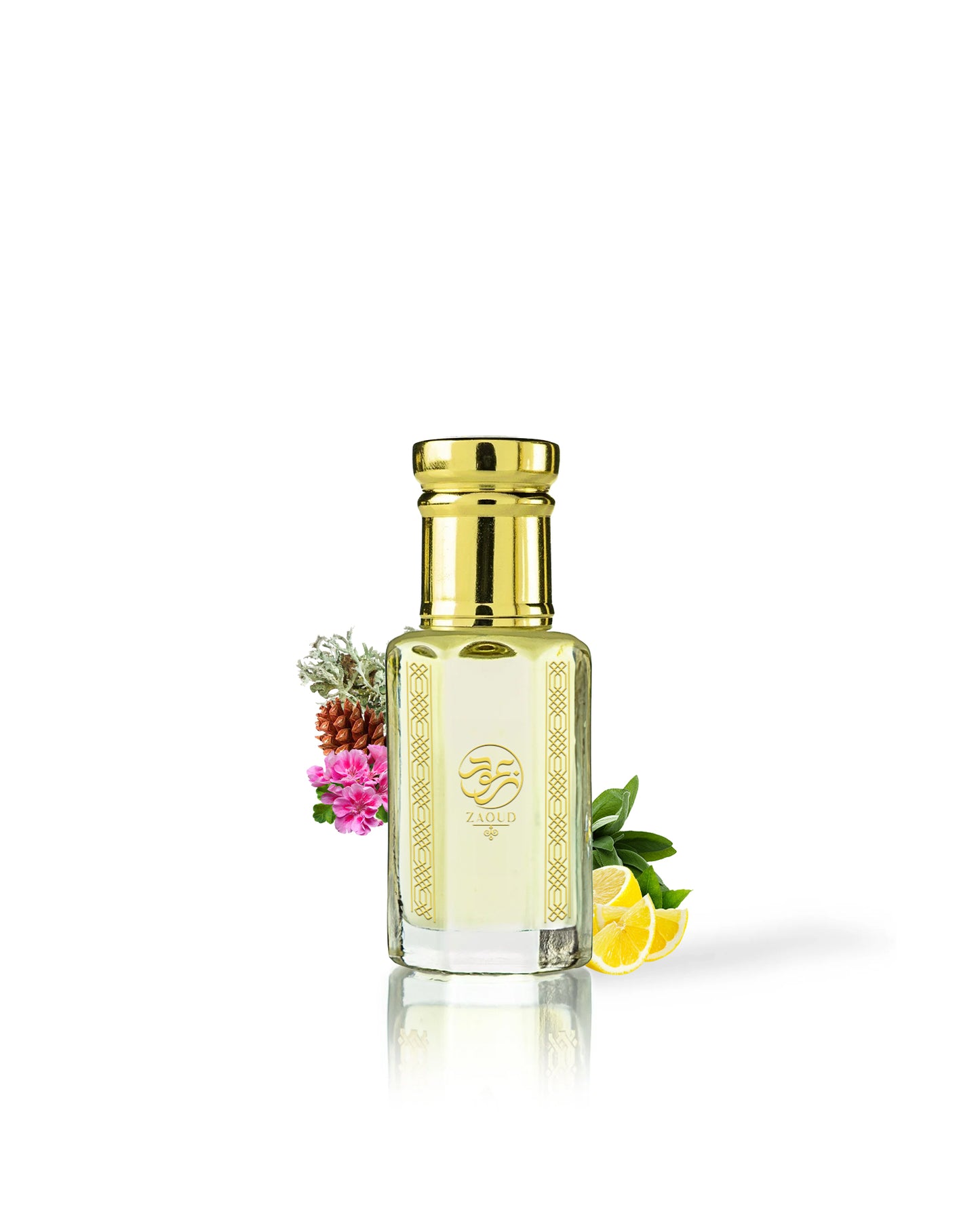
FRAGRANCE NOTES


LEEUWIN Perfume oil
Leeuwin Perfume Oil by ZAOUD: A Coastal Moss Composition Where Two of the Notes Are Not What They Claim to Be
Leeuwin perfume oil is named for the cape at the southwestern corner of Australia where the Indian Ocean meets the Southern Ocean. Moreover, that is not a beach. Beaches are soft and sheltered, while capes are wind, rock, salt, and vegetation that has been beaten low by both. Furthermore, this composition smells like the second thing rather than the first. Consequently, lemon and coastal moss open it, sage and geranium hold the middle, and cedarwood closes it. As a result, it smells like standing somewhere exposed.
TL;DR: Leeuwin is ZAOUD’s own-label coastal fresh perfume oil, alcohol-free, in 3ml, 6ml, and 12ml glass roll-ons. Moreover, Italian lemon and coastal moss open into French sage and Egyptian geranium, closing on Virginia cedarwood and white musk. Furthermore, the alcohol version of this DNA is widely criticised for fading fast. As a result, oil holds the volatile materials on skin instead of letting them evaporate.
LEEUWIN Perfume oil Fragrance Notes:
- Top Notes: Italian Lemon, Sage.
- Middle Notes: Moss.
- Base Notes: Virginia Cedar, Geranium.
Six materials is unusually lean, and the restraint is the point. Moreover, most fresh compositions pile on citrus, herbs, and marine accords until nothing is distinguishable. Furthermore, this one gives each material enough space to be recognised individually. Consequently, you can actually follow the lemon leaving, the sage persisting, and the cedar arriving. As a result, the composition is legible in a way that crowded fresh fragrances rarely manage.
Two of those six notes are misnamed, and neither error is anyone’s fault. Moreover, the moss is not a moss and the geranium is not a geranium. Furthermore, both names were assigned centuries before anyone could analyse what the materials actually were, and both stuck. Consequently, the botany is genuinely worth knowing because it changes what you expect from each one. As a result, the two sections below explain what is really in the bottle.
Is Oakmoss Actually a Moss?
No. Moreover, the material perfumery calls oakmoss is Evernia prunastri, which is a lichen rather than a moss. Furthermore, a lichen is not even a single organism but two living together, a fungus providing structure and an alga producing food through photosynthesis. Consequently, it grows on oak bark in damp forests and looks like pale grey-green antlers. As a result, one of the most important materials in the history of perfumery is technically a partnership between two kingdoms of life.
It also became complicated. Moreover, oakmoss absolute was the backbone of an entire fragrance family for most of the twentieth century, giving classic compositions their dry, inky, forest-floor depth. Furthermore, it was later found to contain atranol and chloroatranol, two potent skin allergens, and industry regulation now requires oakmoss to be treated to remove them or restricted to very low levels. Consequently, the material available today is not the material perfumers used in 1970. As a result, most modern moss notes are rebuilt rather than extracted.
This is where coastal moss comes from. Moreover, no botanical extraction called coastal moss exists, so the name describes a house accord rather than an ingredient. Furthermore, such accords typically combine synthetic oakmoss substitutes with mineral, saline, and green materials to suggest salt-crusted rock rather than damp woodland. Consequently, the impression is coastal rather than forest, which is exactly what the composition needs. As a result, the moss here is an idea assembled by a perfumer, not something harvested from a cliff.
Why Is Perfumery Geranium Not Actually a Geranium?
Because the plant perfumery uses is a pelargonium. Moreover, true geraniums belong to the Geranium genus and produce almost nothing useful for fragrance. Furthermore, the material distilled for perfume comes from Pelargonium graveolens, a South African species grown commercially in Egypt, China, and Réunion. Consequently, the two plants were confused by early European botanists and the wrong name stuck permanently. As a result, every geranium note in every perfume ever made comes from a plant that is not a geranium.
What it smells like explains its job here. Moreover, geranium oil contains geraniol and citronellol, which are the same alcohols that give rose its character, and that shared chemistry earned it the old nickname of the poor man’s rose. Furthermore, it also carries green, minty, and slightly metallic facets that rose does not have. Consequently, in Leeuwin perfume oil the geranium supplies rosy warmth without ever reading as a floral. As a result, it softens the sage without turning the composition feminine.
How Does Leeuwin Perfume Oil Smell From First Roll to Final Hour?
The opening is bright and mineral at once. Moreover, Italian lemon arrives sharp and clean rather than sweet, and the coastal moss accord spreads underneath it with a salty, stony, faintly damp quality. Furthermore, there is no sugar anywhere and no tropical fruit pretending to be the sea. Consequently, the first minutes smell like wet rock in sunlight rather than like a holiday. As a result, this is the least commercial opening in our entire oil line, and deliberately so.
The heart is scrubland. Moreover, sage brings a dry, herbal, slightly leathery greenness, the kind that belongs to plants growing in poor soil under constant wind. Furthermore, geranium threads rosy-green warmth through it without softening the composition into something pretty. Consequently, this is where the fragrance earns its cape rather than its beach. As a result, one writer described this stage of the original as sun-blasted greenery hardened by breeze and heat, which is difficult to improve on.
The base is quiet and long. Moreover, Virginia cedarwood arrives dry, pencil-sharp, and structural rather than creamy, while white musk settles everything close to skin. Furthermore, in the oil format these two materials hold the volatile lemon and sage above them for far longer than alcohol permits. Consequently, the drydown keeps a trace of salt and green long after a spray version would have finished. As a result, the end of the wearing is the part this format changes most.
Why Does This Composition Last Longer as an Oil?
Because its weakness was never the formula. Moreover, wearers of the alcohol version praise the smell consistently and complain about longevity just as consistently, with some reporting the fragrance gone within a few hours. Furthermore, that is predictable from the materials, since lemon, sage, and geranium are all small, light molecules that evaporate quickly. Consequently, only cedarwood and white musk are slow enough to anchor anything. As a result, the composition is beautiful and structurally top-heavy at the same time.
Alcohol makes that worse rather than better. Moreover, ethanol evaporates within seconds of application and carries the lightest molecules into the air with it, which is what produces projection. Furthermore, a composition built mostly from light molecules therefore loses most of itself early. Consequently, oil removes that mechanism entirely, because the carrier does not evaporate and the fragrance compounds stay dissolved on skin. As a result, they release gradually through body heat rather than departing in the first hour.
We explained the underlying science in our article on Shiyaaka Sky. Moreover, longevity depends on molecular weight and vapour pressure, and brightness and evaporation are the same property seen from two angles. Furthermore, that is why genuinely airy fragrances so rarely last. Consequently, the oil format is the most direct solution available to that problem. As a result, Leeuwin perfume oil keeps the character while removing the compromise.
How Do You Apply Perfume Oil for Best Results?
Roll perfume oil directly onto warm pulse points: inner wrists, the sides of the neck, behind the ears, and the inner elbows. Moreover, body heat activates the carrier oil and releases the fragrance gradually through the day. Never rub your wrists together afterwards, because friction breaks down the delicate top notes before they develop. Furthermore, one slow pass per point is enough. Consequently, apply to moisturised skin, since hydrated skin holds oil longest. As a result, roll, press gently, and let warmth do the work.
This composition benefits from one extra habit. Moreover, because the lemon and moss sit at the very top of the pyramid, applying at the throat lets them rise past your own nose throughout the day. Furthermore, wrists give you the fragrance every time you move your hands, which suits a fresh composition better than a heavy one. Consequently, two points is sufficient in warm weather and three in cold. As a result, reapply at midday only if you want the lemon back, because the base never left.
Which Size Belongs to You and Who Should Pass?
Choose your commitment:
- 3ml is the first walk along the cliff. Moreover, fresh compositions behave differently on different skin, so a week of wearings tells you whether this one holds.
- 6ml is the daily habit. Furthermore, months of spring and summer application in something that fits a pocket.
- 12ml is the lighthouse keeper. Consequently, the best value per millilitre for anyone who has already decided this is their warm-weather signature.
Roll it on if:
- You loved this scent profile but gave up on it because it disappeared. Moreover, that is the specific problem this format solves, and it solves it without altering the character.
- You want a fresh fragrance that is genuinely unisex. Furthermore, salt, lemon, sage, and cedar carry no gender coding whatsoever.
- You cannot wear alcohol on skin. Consequently, the formula is entirely alcohol-free, which also suits sensitive skin in summer heat.
Pass if:
- You want projection across a room. Moreover, oil rewards proximity by design, so this will always be discovered rather than announced.
- You want a sweet or tropical summer fragrance. Furthermore, there is no sugar, no coconut, and no fruit here. As a result, if you want warmth instead, BALZAC or CHE TOBACCO hold that territory.
How Long Does Leeuwin Perfume Oil Last on Skin?
Longer than the alcohol version, which is the entire reason this oil exists. Moreover, wearers of the spray format report anywhere from three hours to seven depending on skin, with the low reports far more common than the high ones. Furthermore, oil removes the evaporation mechanism that causes those low numbers. Consequently, in our testing, Leeuwin perfume oil delivered seven to nine hours of lemon-moss-to-cedar-musk wear at intimate range. As a result, the improvement is most noticeable in the middle hours.
Skin and weather still matter. Moreover, dry skin shortens any fresh composition, so applying to moisturised skin makes a measurable difference. Furthermore, heat accelerates release, meaning a summer afternoon will move the fragrance along faster than a spring morning. Consequently, spring and summer daytime remain the natural setting despite the improved longevity. As a result, this is a roller for open air, bright light, and days spent outside.
Support
Frequently asked questions
Everything you need to know about shipping, authenticity, and caring for your fragrance.
01 What does Leeuwin perfume oil smell like?
02 How do you apply perfume oil?
03 Is oakmoss a moss?
04 Why do fresh fragrances fade quickly?
05 What is geranium in perfume?
Orders & shipping
06 Do you ship across Italy?
Yes. We offer free shipping on all Italy orders over €75, typically delivered in 24–48 hours.
07 How can I track my order?
Once your order ships, you will receive a tracking link by email. You can also check status from your account.
Authenticity & products
08 Are your fragrances authentic?
Yes. Zaoud is a trusted reseller of 100% authentic Arabic and niche perfumes sourced from official channels.
09 Can I get help choosing a scent?
Absolutely. Contact us anytime for a free consultation — we help clear doubts before you buy.
Returns & care
10 What is your return policy?
Returns are accepted on eligible unopened items within the timeframe stated in our returns policy. Contact support to start a return.
11 How should I store my perfume?
Keep bottles upright in a cool, dry place away from direct sunlight and heat to preserve the fragrance.
Still have a question?
Contact us