


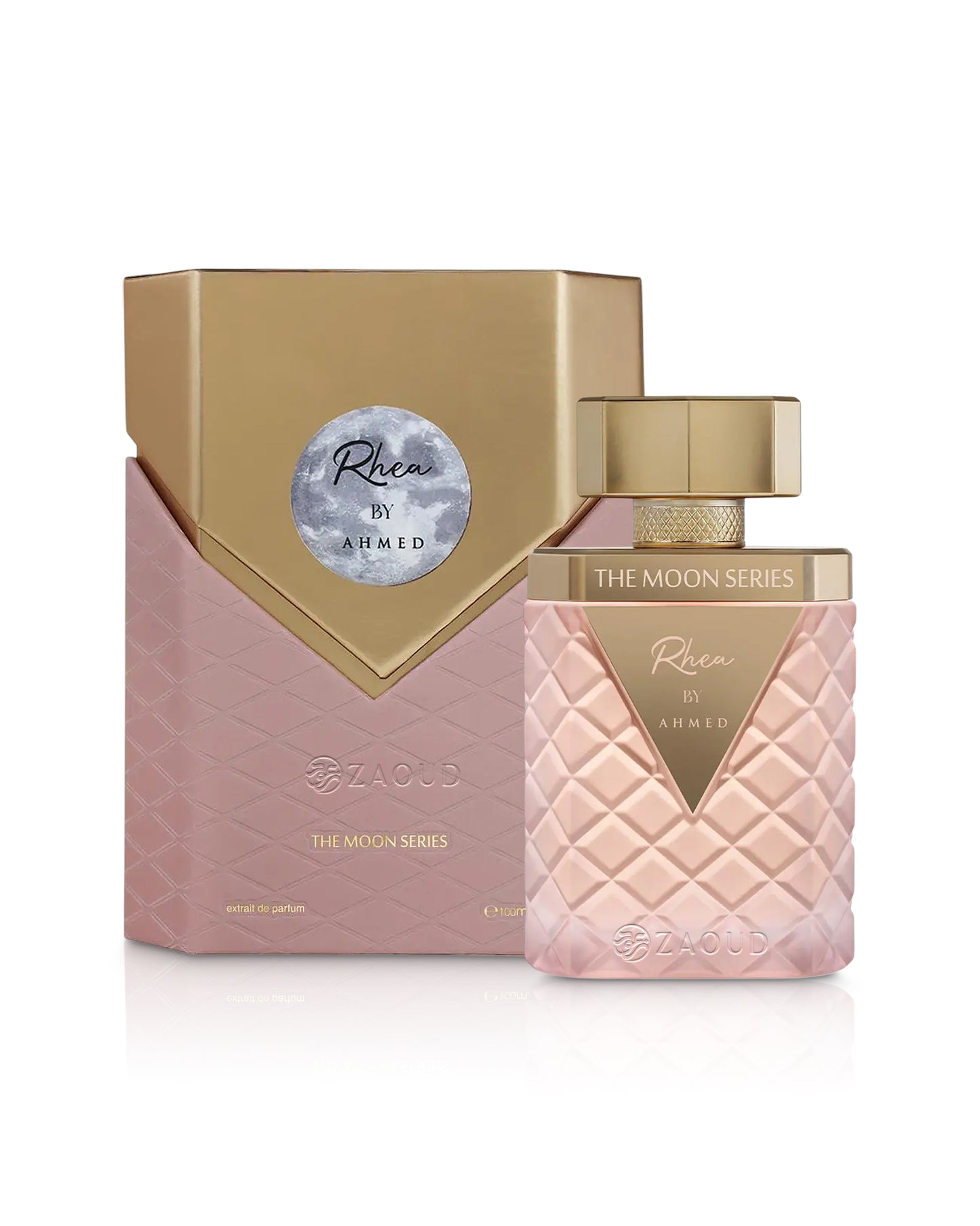


RHEA EXdp
Ahmed Al Maghribi Rhea, Citrus, Nectarine, Apple, Gardenia, Magnolia, Jasmine, Patchouli, Musk, and Sandalwood in a White Floral Extrait de Parfum from The Moon Series.
Ahmed Al Maghribi Rhea smells like an offering placed at the feet of a stone goddess, ripe fruit and white flowers gathered in cupped hands. Citrus, nectarine, and apple open with orchard abundance. Gardenia, magnolia, and jasmine bloom into a creamy white-floral heart. Then patchouli, musk, and sandalwood ground everything in warm earth. As a result, the composition feels nourishing rather than perfumed.
Released as part of The Moon Series collection, Ahmed Al Maghribi Rhea takes its name from one of the most powerful figures in Greek mythology. Moreover, this is the same collection that produced Prometheus, the dark, smoky composition named after the Titan who stole fire. Furthermore, where Prometheus is fire and rebellion, Rhea is earth and nourishment. Together they form the collection’s mythological backbone.
Ahmed Al Maghribi RHEA Fragrance Notes:
- Top Notes: Citrus, Nectarine, Apple.
- Middle Notes: Gardenia, Magnolia, Jasmine.
- Base Notes: Patchouli, Musk, Sandalwood.
You will ikeAhmed Al Maghribi Rhea if you like Fayora oshino.
Nine notes built around three classical movements: orchard fruit, sacred white flowers, and grounding earth. In particular, the pyramid mirrors a traditional offering to a fertility goddess, ripe produce and freshly cut blossoms placed on warm soil. Furthermore, the white floral heart pairs three of perfumery’s most storied flowers, creating a bouquet that feels both abundant and reverent.
Ahmed Al Maghribi Rhea: Named After the Mother of the Gods
In Greek mythology, Rhea is a Titaness, daughter of Uranus and Gaia, sister and wife of Cronus, and mother of the Olympian generation. Moreover, she gave birth to Zeus, Hera, Poseidon, Hades, Demeter, and Hestia. Furthermore, the ancient Greeks called her “Mother of the Gods” and associated her with mountains, sacred groves, and the abundance of the natural world.
Ahmed Al Maghribi Rhea translates that mythology into composition. Specifically, the orchard fruits evoke abundance, the white florals echo sacred groves, and the warm woody base grounds everything in maternal earth. As a result, the fragrance feels less like a perfume and more like an offering, something nourishing, generous, and quietly powerful, the way mother-goddess imagery is meant to feel.
How It Smells: From Orchard to Sacred Grove to Warm Earth
The opening is soft, juicy, and immediately welcoming. Citrus arrives first with bright clarity. At the same time, nectarine adds velvety, slightly fuzzy stone-fruit warmth that softens any sharpness. Furthermore, apple contributes crisp, fresh-orchard sweetness. As a result, the first spray feels like walking into a fruit market at the end of harvest, abundance everywhere, nothing aggressive, everything generous.
Within fifteen minutes, the heart blooms into a full white floral. Specifically, gardenia introduces its signature creamy, slightly buttery, intoxicating richness. Moreover, magnolia adds airy, lemon-tinged elegance that lifts the gardenia’s weight. Furthermore, jasmine contributes its honeyed, slightly indolic depth. Consequently, the heart smells like a temple grove where someone has just placed fresh-cut white flowers around an old stone statue.
The drydown grounds the composition in warmth and skin-comfort. Patchouli provides earthy, slightly damp depth that anchors the white florals. In addition, sandalwood adds creamy, milky woodiness with quiet sweetness. Musk delivers a clean, intimate finish. Consequently, the lasting impression is white flowers settled into warm wooden hands, the kind of fragrance that feels like being held.
The Moon Series: Two Titans, Two Worlds
The Moon Series is Ahmed Al Maghribi’s most artistically ambitious collection. Moreover, the series is named after celestial and mythological themes, moving the house beyond inspired-by compositions into original creative territory. Furthermore, with Rhea joining Prometheus, the collection now contains two fragrances named after Greek Titans, the older generation of gods who ruled before the Olympians took their places.
The contrast between the two compositions is deliberate. Specifically, Prometheus is dark, smoky, and woody, herbal, bitter chocolate, and guaiac wood evoking the Titan who stole fire from the gods. Rhea is the opposite: soft fruits, white flowers, and warm woods evoking the Mother of the Gods. Consequently, the two compositions represent two faces of the Titan generation.
Who Should Wear This and Who Should Skip
This is for:
- Lovers of classical white floral compositions who want gardenia, magnolia, and jasmine in a single coherent bouquet rather than as supporting notes.
- Wearers drawn to soft, nourishing, almost comforting fragrances that project warmth rather than statement.
- Anyone who appreciates mythological naming and conceptual collections, buying a fragrance because the story behind it matters.
- Collectors of The Moon Series who want the soft maternal counterpart to the dark, fiery Prometheus.
On the other hand, skip if:
- You dislike heavy white florals. Gardenia, magnolia, and jasmine together create a rich, prominent floral presence.
- You want a sharp, modern, or genderless composition. Rhea leans soft and classical rather than edgy or contemporary.
Ahmed Al Maghribi Rhea Performance: Soft Persistence
As an extrait de parfum, Ahmed Al Maghribi Rhea benefits from the house’s characteristic high oil concentration. Moreover, gardenia, jasmine, and sandalwood absolutes are naturally long-lasting due to their complex molecular structure. Furthermore, patchouli is among the most persistent base materials in perfumery. Therefore, expect 10+ hours of wear with moderate, intimate projection that surrounds rather than announces.
For best results, apply to inner wrists, neck, and behind the ears. Furthermore, the fruity opening settles within fifteen minutes into the white floral heart, so allow that transition before judging. In addition, Rhea performs particularly well in spring and early autumn, when its abundant character feels most natural against changing weather.
Support
Frequently asked questions
Everything you need to know about shipping, authenticity, and caring for your fragrance.
Orders & shipping
01 Do you ship across Italy?
Yes. We offer free shipping on all Italy orders over €75, typically delivered in 24–48 hours.
02 How can I track my order?
Once your order ships, you will receive a tracking link by email. You can also check status from your account.
Authenticity & products
03 Are your fragrances authentic?
Yes. Zaoud is a trusted reseller of 100% authentic Arabic and niche perfumes sourced from official channels.
04 Can I get help choosing a scent?
Absolutely. Contact us anytime for a free consultation — we help clear doubts before you buy.
Returns & care
05 What is your return policy?
Returns are accepted on eligible unopened items within the timeframe stated in our returns policy. Contact support to start a return.
06 How should I store my perfume?
Keep bottles upright in a cool, dry place away from direct sunlight and heat to preserve the fragrance.
Still have a question?
Contact us